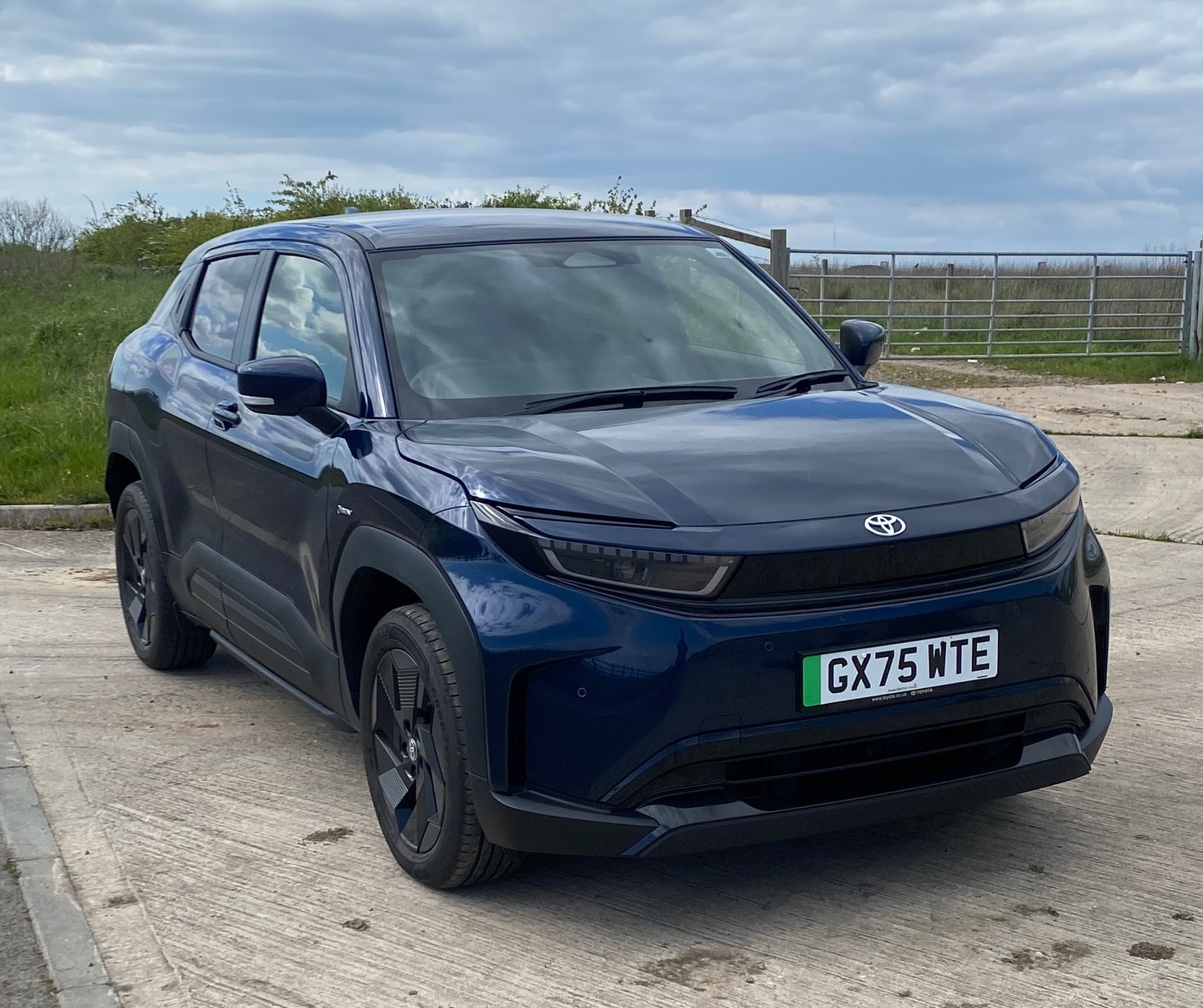
Toyota likes to have a finger in every pie and has cooked up something for the compact MPV or SUV buyers, the Urban Cruiser. Robin Roberts (and WheelsWithinWales) test drives the latest version…
It is the second generation Urban Cruiser it developed along with Suzuki and this time it has gone full-electric as Toyota wants to offer buyers a selection of power sources which fulfil their needs in different markets.
The range in showrooms this spring has three models, Icon, Design, Excel, all based on a platform shared with Suzuki eVitara. Prices range from £29,995, £33,495 and £35,745 respectively before options are added. It was also supplied with both AC and DC charging cables which are very useful.
The mid-range Design gets heated front seats and steering wheel, auto-retracting heated door mirrors and a windscreen wiper de-icer, together with the higher capacity battery. It is expected to become the best seller in the current series and shares the bigger battery with its Excel stablemate rather than the entry level Icon 49 kWh power pack.
Competing in the B-SUV sector it has some tough familiar rivals as well as new challengers from Chinese brands, so the Urban Cruiser’s real appeal is likely to be to existing Toyota owners who value rock-solid reliability and durability.
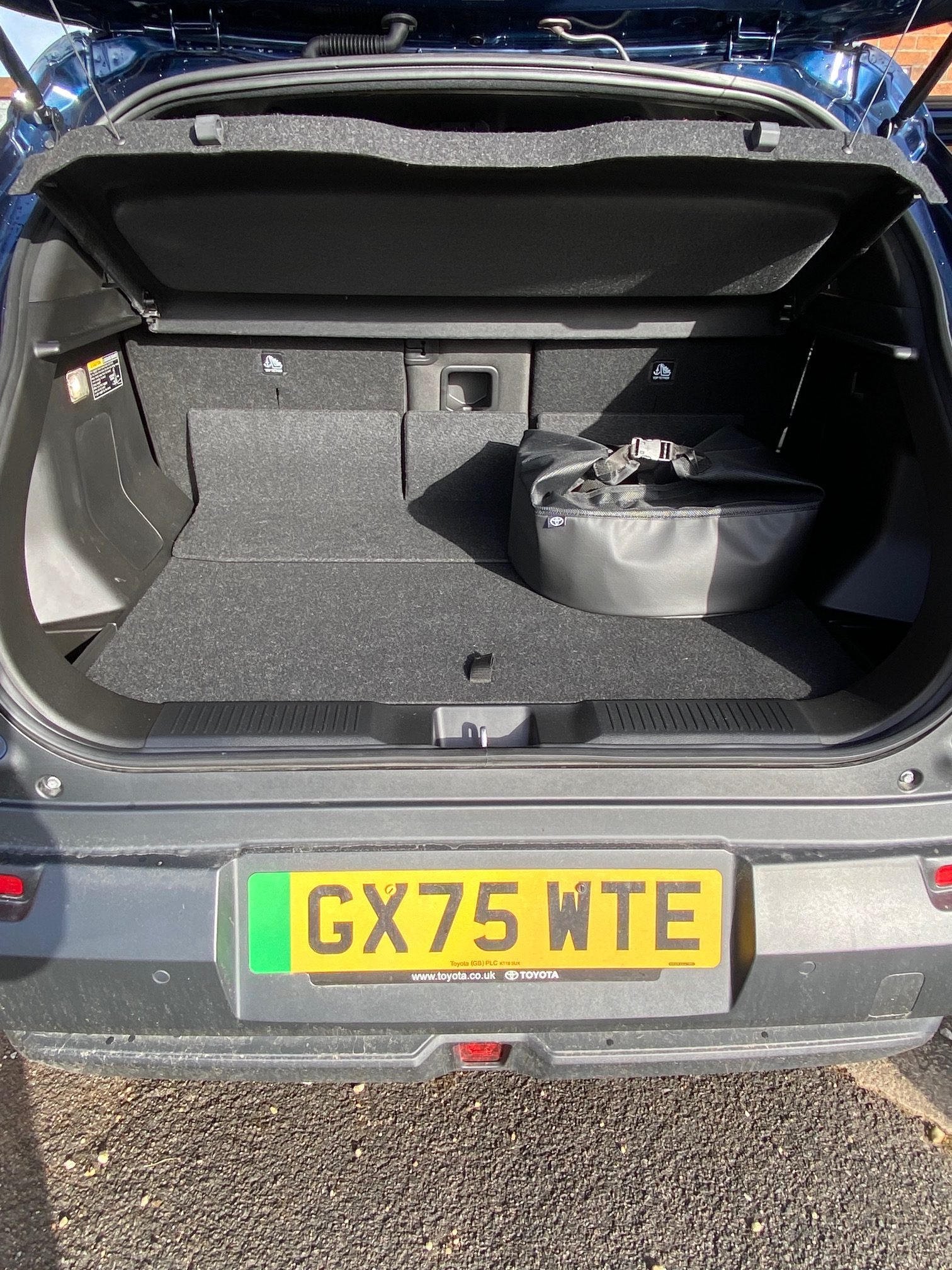
It is a very practical body, tall and wide with wide opening doors to ease access and egress, has an unusual rear sliding back seat arrangement to maximise legroom or rear luggage space and a powered fifth door opening from below waist height to reveal a flat, wide floor plus a small compartment beneath for seasonal oddments.
At the other end, the motor fills the bay and all an owner has to manage is the washer bottle for the windscreen and brake fluid.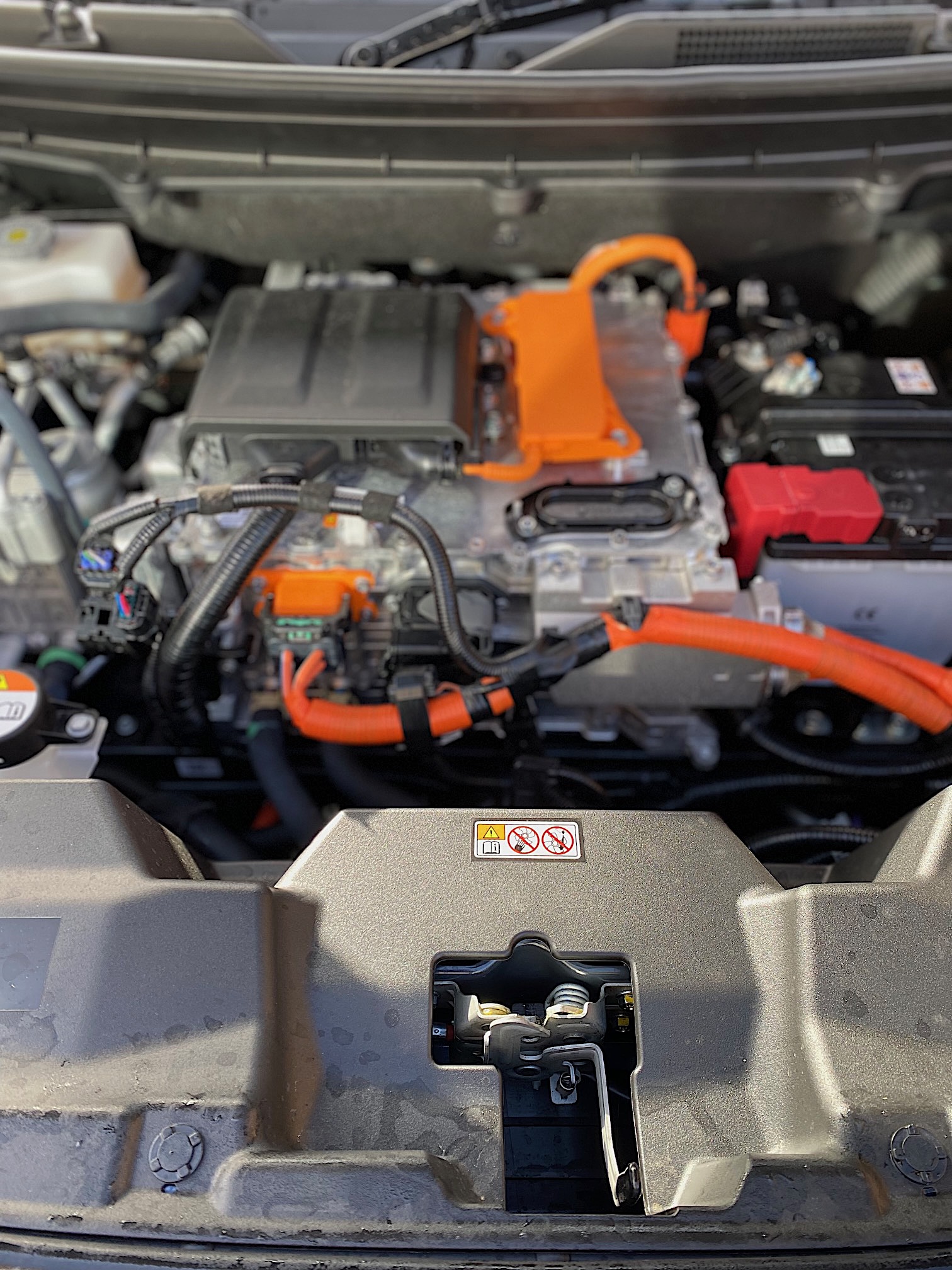
Power delivery is simply a matter of sitting in the car, pressing the power button, turning the drive selector and depressing the performance mode button to suit your needs.
Even in its strongest mode, the acceleration is not particularly quick and its other settings barely seemed to differentiate with one another. We recharged a few times over a variety of journeys and averaged a range of no more than 230 miles, about 30 miles less that the official test figures suggest.
We found the regeneration system added just a few miles to our trips while running; a/c, radio and a heavy foot quickly reduced the estimated remaining distance.
It steered very well with a good turning circle for parking, nice progressive brakes and an efficient parking or hold brake in traffic or on hills.
Secondary controls around the steering wheel spokes and column meant everything you are regularly going to need is close to touch but I would have liked clearer marking of the spoke buttons in particular.
There were a few additional controls under the bottom edge of the infotainment screen, and they were very effective and much better marked although further away from the driver.
The infotainment screen carried the familiar mapping, telecommunications, entertainment and driving assist menus but it was a cluttered display and not particularly quick changing.
The Urban Cruiser has a good sized cabin and the heating and ventilation did a reasonable job cooling and warming it with plenty of outlet vents, and the car benefitted from four powered windows.
Visibility was good to front and sides with good wash and wipe at the front but a smaller rear screen hid some traffic from view and you learned to rely on mirrors and sensors.
Reversing was best accomplished by looking at the camera’s view behind as very little could be seen through the window or over the shoulder with a very wide c-pillar in the way.
We have mentioned good access and once inside the seats were well shaped and padded for comfort with a lot of adjustment room and a useful off-set split 60/40 rear divide. Headroom was excellent throughout.
Ride quality was a bit disappointing for a family car. The moderate profile tyres did little to absorb small tarmac recesses and anything larger found the springs and dampers working hard and not always succeeding to soak up poorer surfaces.
That said, the seats proved adept as a last resort and smoothed out the ride in a better way than you might imagine.
VERDICT
The new generation of Toyota Urban Cruiser is front wheel drive and a bit surprising considering both it and Suzuki have a good reputation in building small all wheel drive systems and this might be worth their engineers remembering next time around.
Then, the B-SUV sector would have to sit up and take notice of the Urban Cruiser and rather than compete with it, rivals would have to compete against it and Toyota’s reputation would be enhanced.
For: Reasonable performance, modest range, comfortable seats & adjustable rear legroom, smooth powertrain, steering & brakes.
Against: Stiff ride, road noise intruded, very plastic interior and out-dated infotainment technology. Price: £34,460 Mechanical: 172 bhp motor, 61 kWh lithium-ion battery, front wheel drive Max Speed: 93 mph 0 – 62 mph: 8.7 secs Range: 230 miles Insurance Group: 34D C02 emissions: Zero Bik rating: 4%, £10FY, £200SR Warranty: 3 years/ 60K to 10 years/ 100K Size: L 4.29 m 14.07 ft) W 1.80 m (5.91 ft), H 1.64 m (5.38 ft) Bootspace: 244 to 566 litres (8.62 to 19.99 cu.ft) Kerbweight: 1,839 kg (4,054 ft)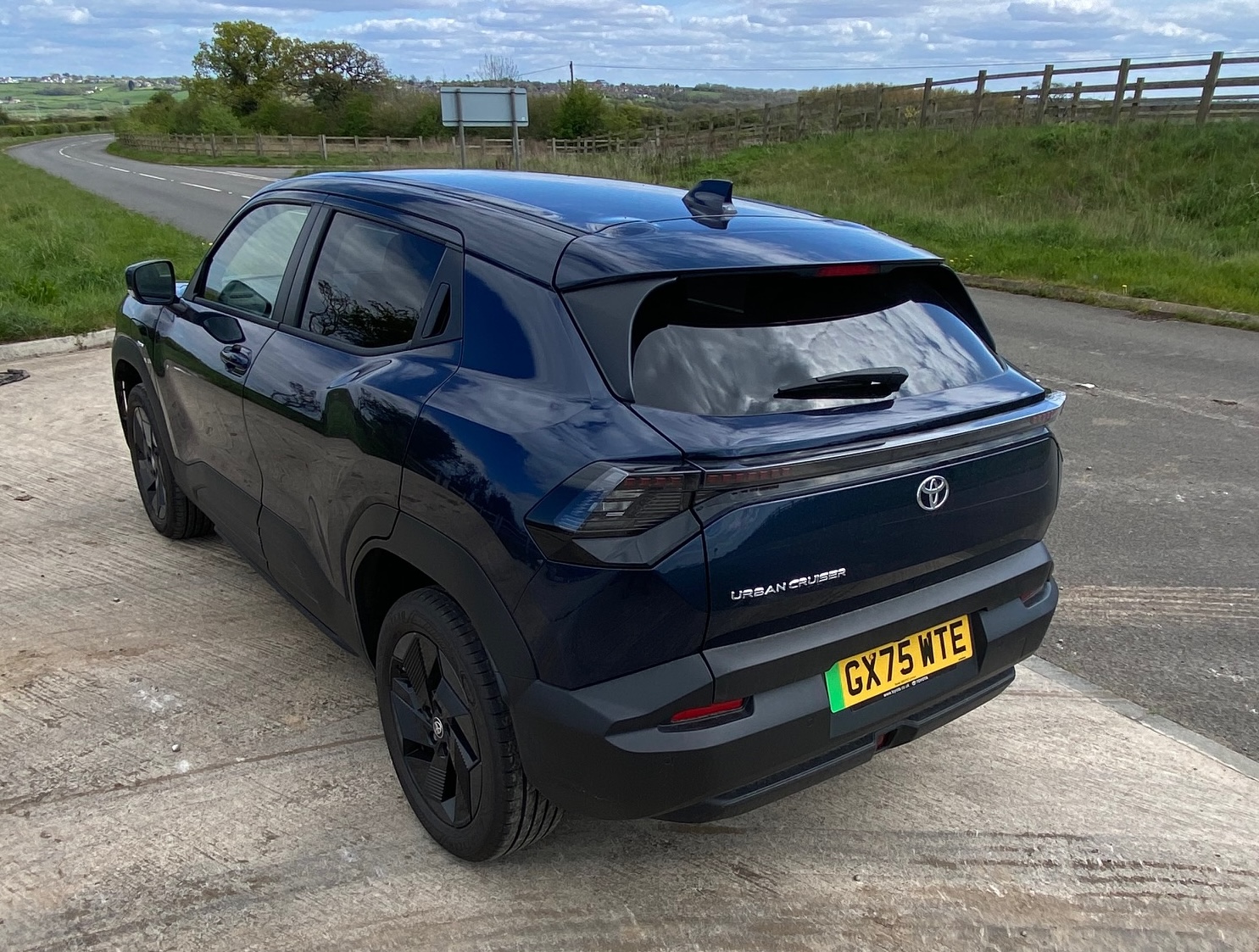
FAST FACTS
Model: Toyota Urban Cruiser Design
© WheelsWithinWales