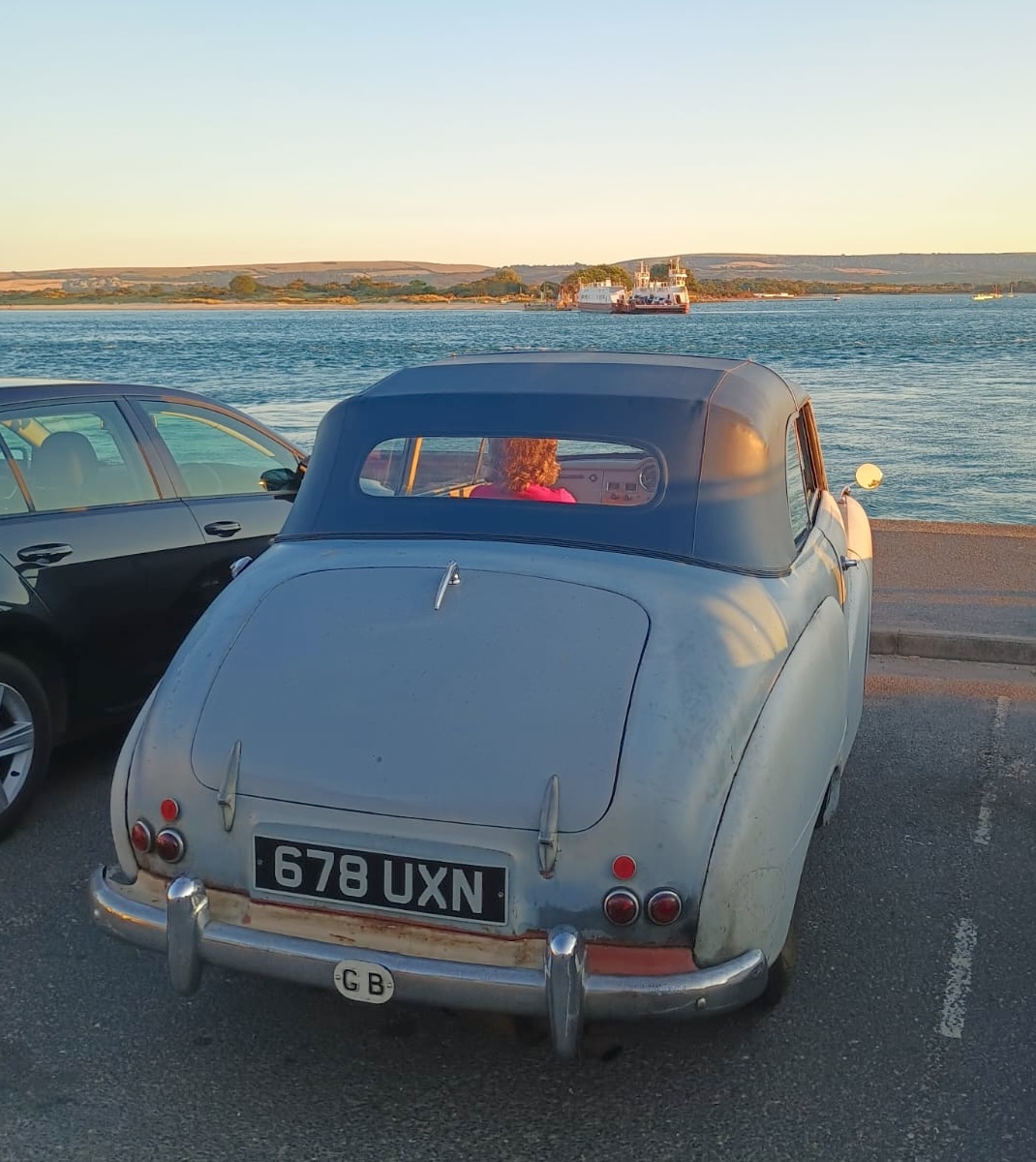
Kim Henson advises on keeping you and your classic vehicle mobile and as cool as possible during heatwaves…
(Photograph and all words © Kim Henson)
Summertime is usually a happy time for owners of classics to get out and about with their vehicles, whether the destinations involved are local shows/rallies or events, or indeed day trips, weekend breaks or holidays further afield. For many, driving their vehicle, especially on long runs, represents a major part of the enjoyment of owning it.
However, the recent heatwave conditions in the UK have resulted in extreme ambient temperatures that can put extra strain on the vehicle and its occupants.
Here are a few tips that may help you, your passengers and your classic survive when driving in very hot conditions. Focus first on the vehicle’s condition…
Check your vehicle’s cooling system, especially…
Coolant level and condition, fan belt state and tension, radiator, pressure cap and hoses condition, water pump integrity (watch for leaks from its underside).
Ensure that the thermostat is working as designed and is a ‘summer’ type (typically 74 degrees C – but check your vehicle’s handbook/workshop manual).
Make sure that the heater (if fitted) works. If you get held up in traffic queues or have tough hills to climb, operating the heater helps dissipate heat from the engine (but of course note that the car’s interior will warm up correspondingly!).Assess the fuel supply system
Assess the fuel supply system
Old vehicles often don’t like modern petrol, which is more volatile than that of days gone by, so will evaporate much more readily. This can result in ‘vapour lock’, a situation in which the fuel pump cannot deliver petrol to the engine (it can only pump a liquid, not a vapour). This potential difficulty is especially troublesome on vehicles with the fuel supply and exhaust systems located on the same side of the engine.
To avoid problems, consider re-routing fuel lines as far away as possible from heat sources (notably including the exhaust system), and insulating the fuel pipes/hoses to keep them cool (specialist insulation material for this purpose is available).
Some classic vehicle owners have found that by installing an additional heat shield (often, made of aluminium) between the exhaust area and the carburettor(s)/fuel supply components, fuel evaporation can be avoided.
The installation of an additional electric cooling fan to draw or force more cooling air through the radiator and over the engine can also help a great deal. The fan can be wired via a manually operated switch for the driver to turn on and off as required, or through a thermostatically controlled set-up that automatically operates the fan when needed.
Ensure that all air vents to the engine and the car’s interior are operational
Some older classic cars and commercials were fitted with bonnet and scuttle-mounted air vents, to allow hot air out from the underbonnet area, and cooling air into the passenger compartment, respectively. These can make a big difference; check that they move as designed!
Stay cool and avoid driver fatigue
Ultra-high temperatures and (usually) the lack of an air conditioning system that we have become used to in modern vehicles can combine to make lack of concentration/drowsiness a real possibility. For safety and comfort it is imperative that frequent stops are made for resting and for rehydration.
If driving an open top car, or one with a large sun roof open, the potential dangers of sunburn cannot be over-emphasised. It might be worth considering closing the hood or roof and open the vehicle’s side windows instead.
Take care, and plan ahead
Awareness of the possible problems can help to avoid them, especially if you plan ahead.
It is wise to keep on board within the vehicle, high visibility vests for everyone on board, plus a warning triangle. These can be obtained in very high visibility versions with bright lights to warn traffic of an obstruction, if you should be unlucky and the vehicle breaks down. In such a situation it is VITAL to get all passengers out of the vehicle (exiting from the side of it away from the traffic) and to a safe area away from the road, also to carefully deploy your warning triangle as rapidly as possible.
Last but not least it should go without saying that your vehicle’s brakes, tyres (including pressures), steering and suspension and other mechanical components/systems plus wipers and lights should also be checked, in addition to the aspects outlined above.
Wishing you safe and enjoyable summer travelling in your classic.
Kim Henson