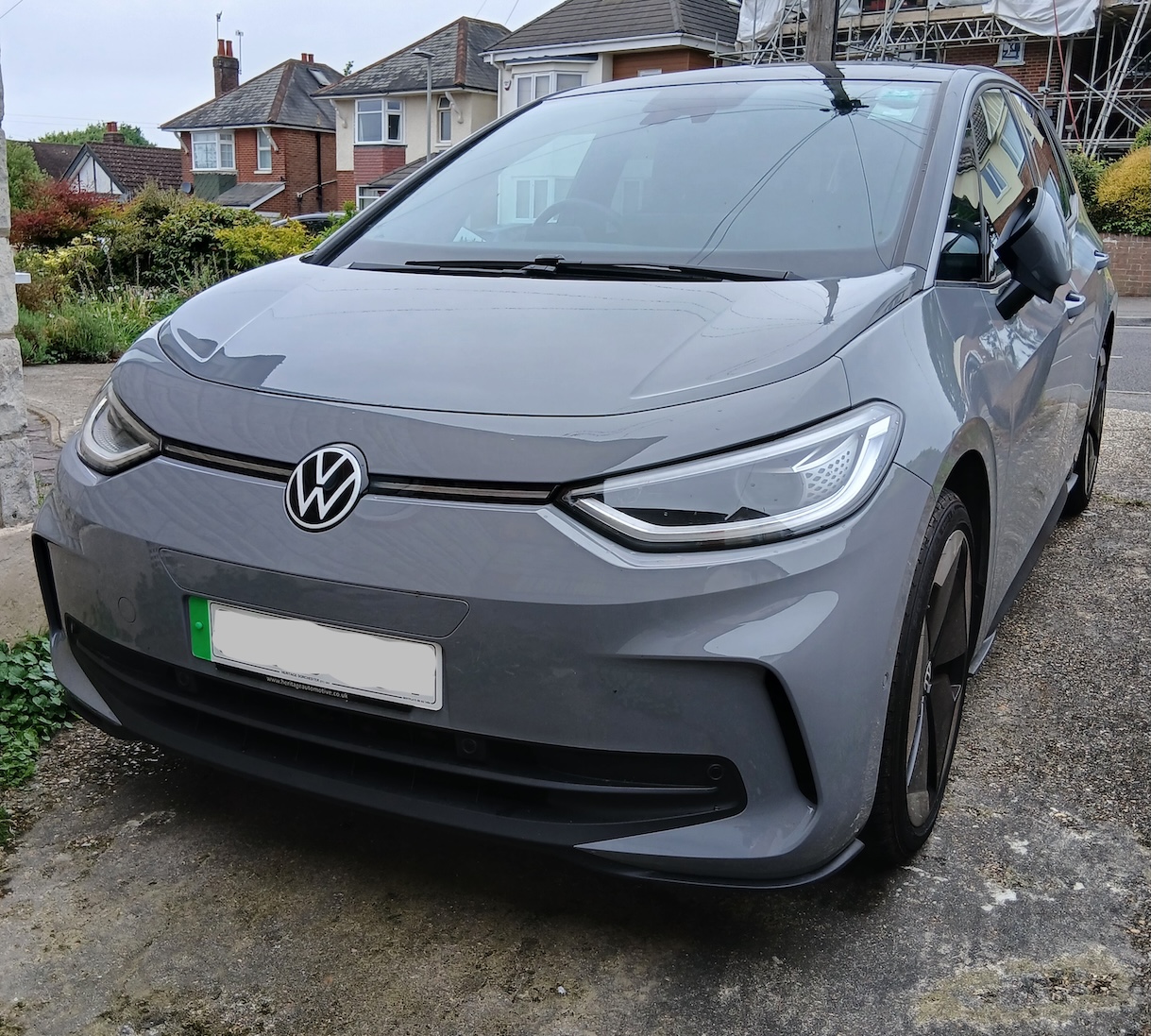
Gerald Morgan reports comprehensively on his own early ownership experiences with a VW EV (pictured above)…
(Text and all photographs © Gerald Morgan)
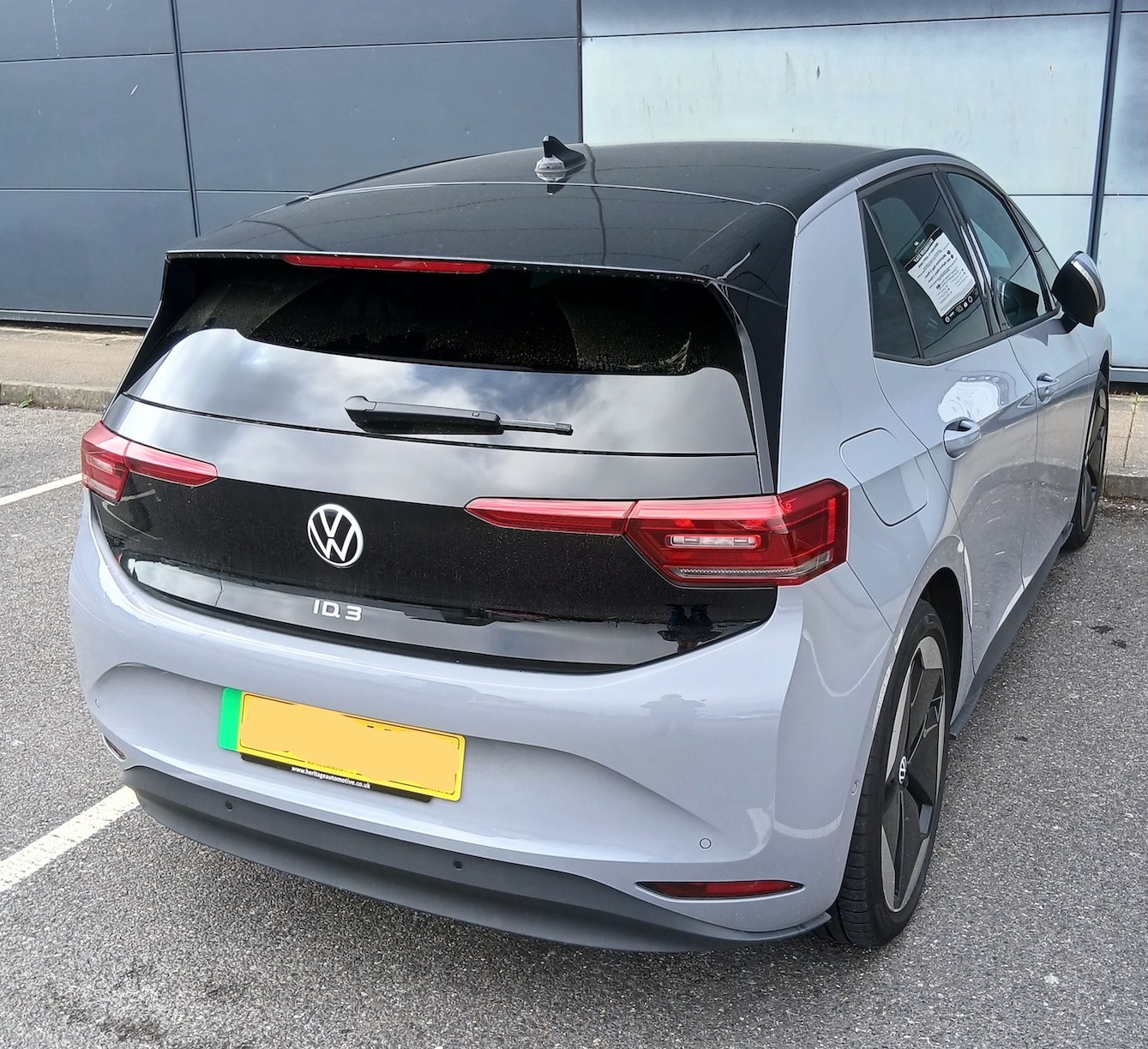
Recently we traded in our VW Taigo for an all electric VW ID.3 (Pro Match S 77kWh) as we decided to go for it before we became too old to adapt… It also coincided with the latest oil crisis.
My daughter has a VW ID.3, which is a 59kWh version that has a theoretical range of 268 miles combined. I wanted a bit more, hence the 77kWh version that has a theoretical range of 351 miles. So here then is a quick look at first impressions of driving an EV, and some options available for charging it.
The Car
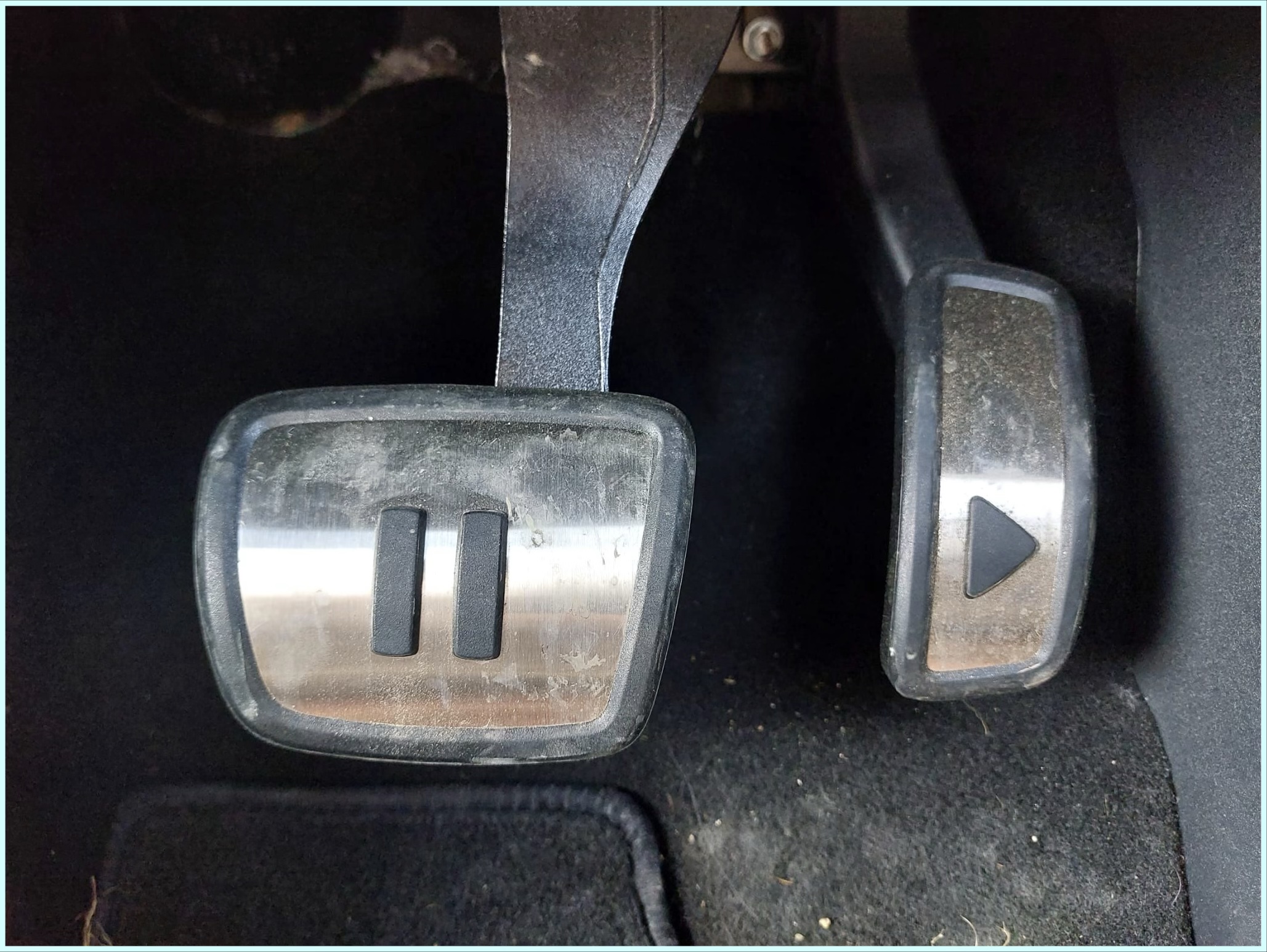
The first thing I noticed on getting in it were the pedals; only two, with one marked pause (⏸), and the other one, play (⏵). A nod to the younger generation brought up with these symbols on their mobile devices perhaps?
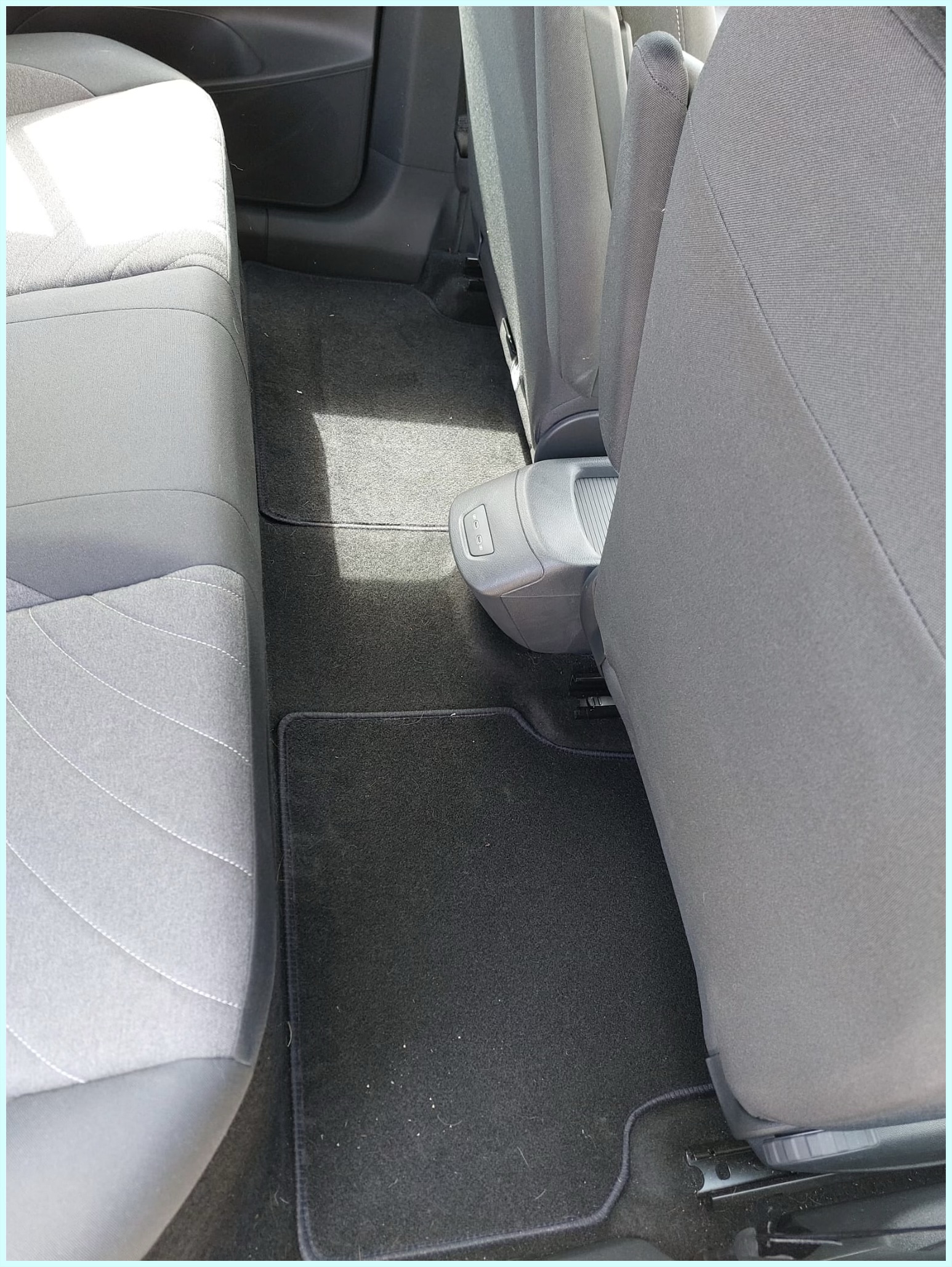
Next was that the rear footwell had a flat floor right across, with no annoying tunnel in the way, so more foot room and it is more comfortable for a 3rd back seat passenger. There was no gear stick, and no conventional handbrake lever either.
The ID.3 has a lever on the steering wheel to select drive / drive and braking / reverse. The drive and braking uses regenerative braking technology. This first position means that when driving with the foot off of the play pedal, braking will be in effect and the battery will be recharged as the car slows down, thereby increasing its range. The battery charge and estimated range were clearly displayed through the steering wheel.
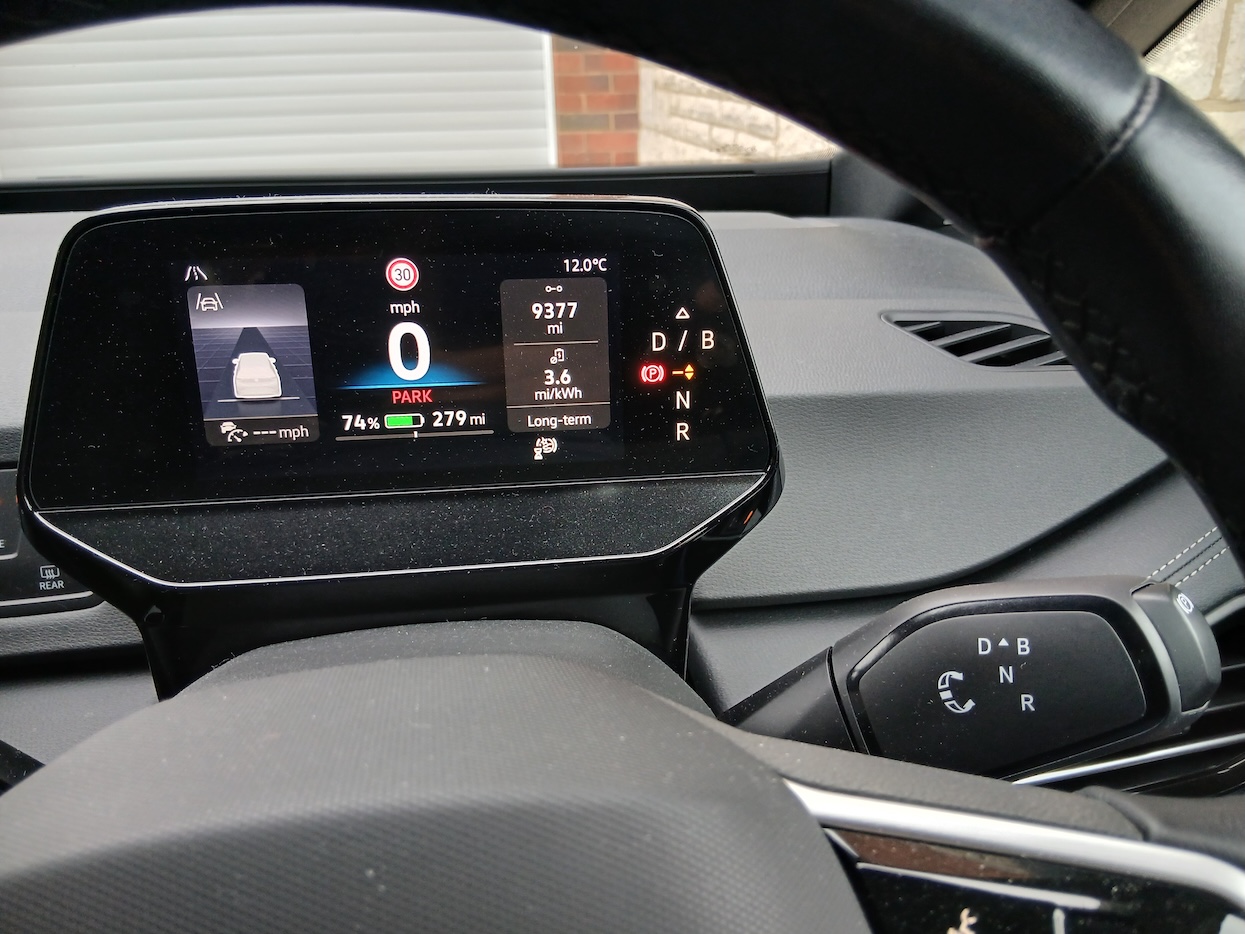
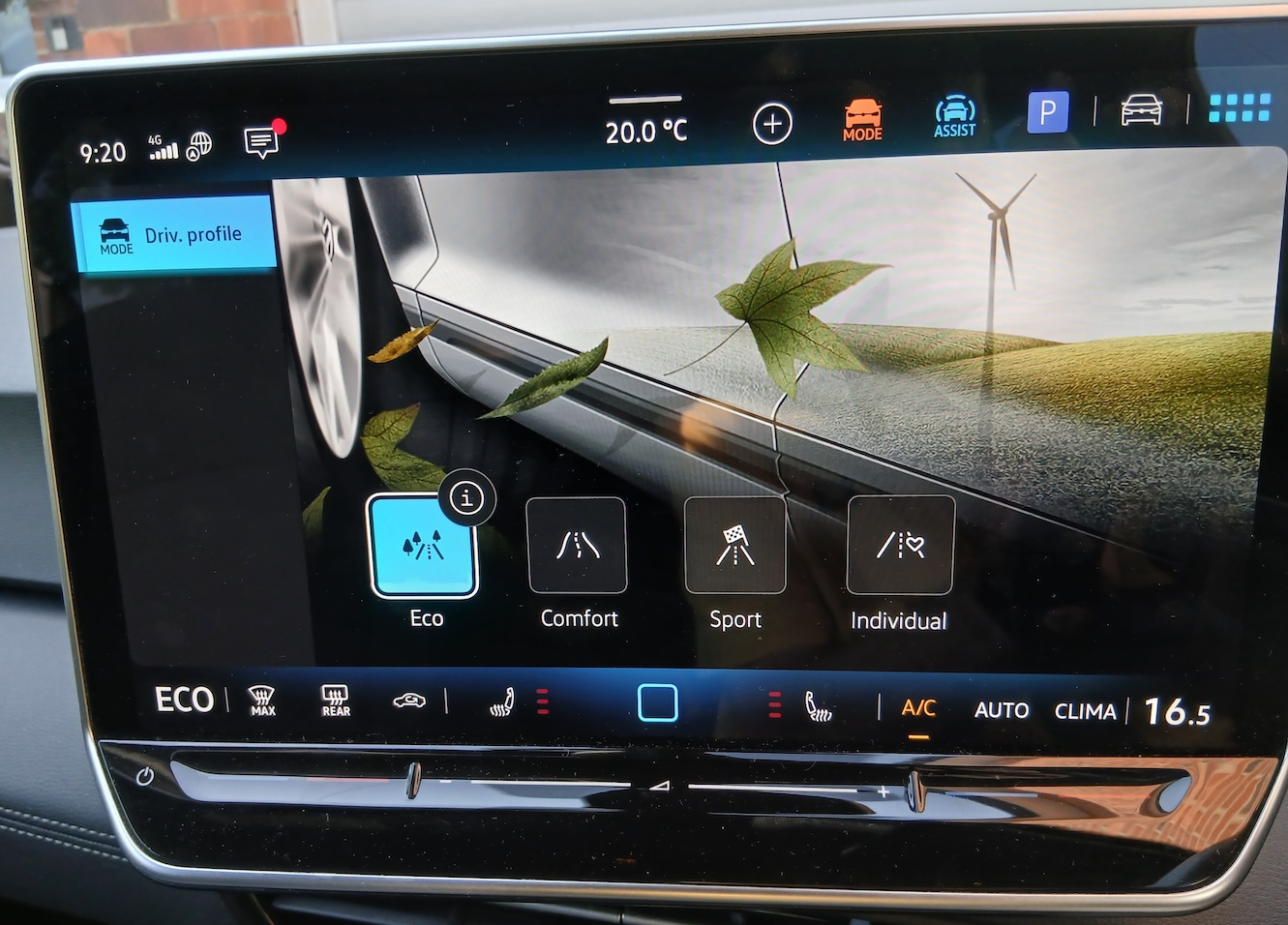
The Eco mode has to be selected for each journey as Comfort is the default.
Driving
So what was it like to drive? To put it into motion, press down on the pause pedal and twist the select to drive or reverse. After my first, hesitant, use of the play pedal, without being able to touch a handbrake, progress was rapid – the acceleration and power was noticeable, especially going up hills. Using the ‘drive and braking’ mode took a little getting used to as the car slowed down every time my foot was taken off the play pedal, however, this was useful as I drove round town in little traffic. I hardly had to use the brake, sorry, pause pedal. I got used to the car fairly quickly. Driving on a dual carriageway proved to be effortless, with loads of acceleration when needed. However, driving at a constant speed, such as on a motorway, will reduce the effective range compared to driving on more rural or town roads where regenerative braking can take place.
I did notice that I was looking at the %charge and mileage left regularly, but without the anticipated anxiety. In a petrol car I would probably look at the fuel gauge more after about 200 miles on the trip reading. So not too different.
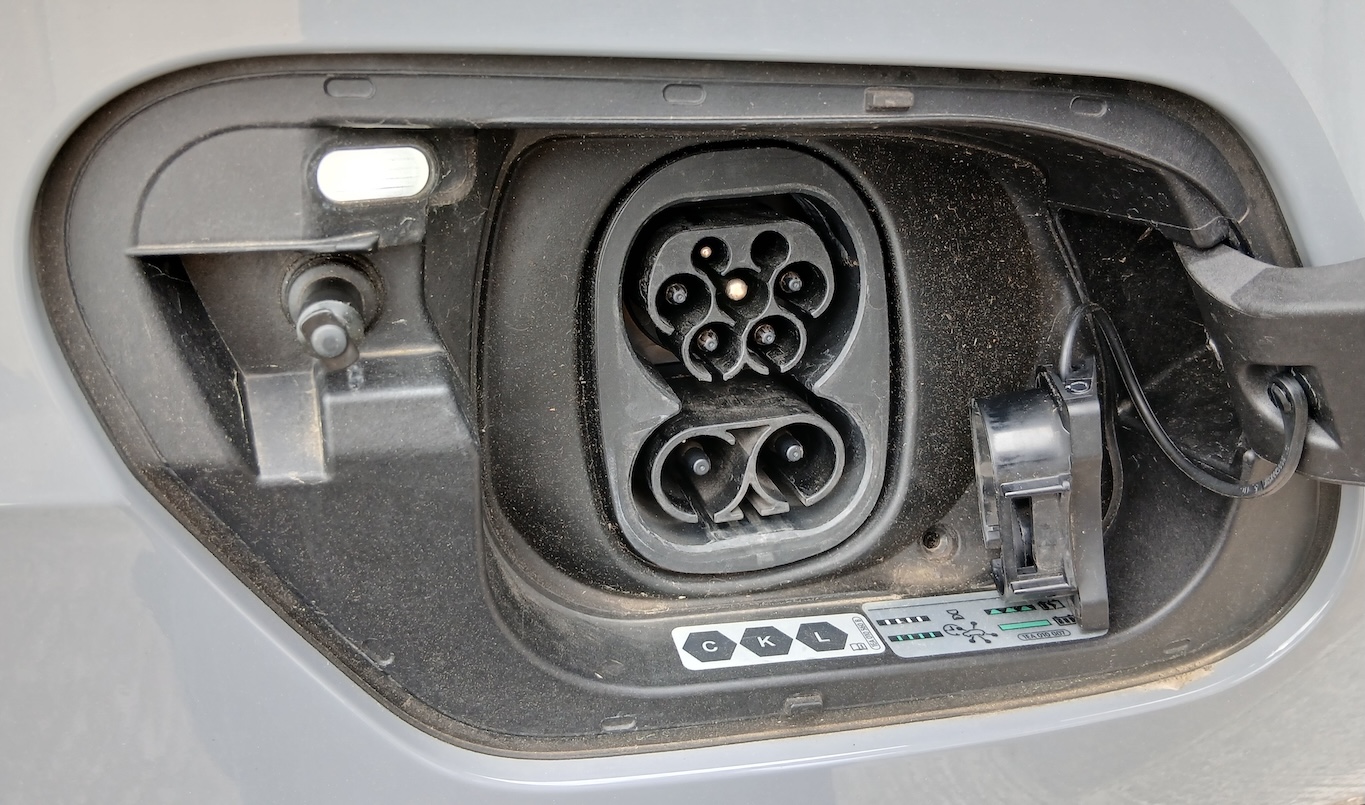
A Type 2 cable is supplied with the car for charging, but the socket in the car can also take a CCS 2 charger cable. Type 2 is for lower kW chargers such as at home, and uses the top half of the socket. The CCS 2 connection is for faster charging at commercial charging points, and uses both parts of the socket.
There is a feature called ‘driving profile’ on the display. The manual that comes with the car is quite thin, and the on-line version of the manual is not very helpful, or easy to use as it is all drop down bullet points, with not much description (in my opinion). So looking at the driving profile in the information was not that helpful, but it seems to affect the acceleration and other ways that the battery power is used. The options are Eco, Comfort, Sporty, and Individual. The default is Comfort, and it always reverts back to this when starting up. I used the Comfort mode for a while, and then tried the Eco mode latterly. As mentioned below, the display shows a long term usage of 3.6 miles per kW, but in the short time that Eco mode has been used, this has gone up to 3.7 miles per kW, and the acceleration is not as powerful – but still better than the Taigo.
I find driving an EV to be less stressful than driving a manual petrol car. Getting a longer range model has taken a lot of the ‘range anxiety’ away, and the use of home charging, and when away from home having an easy way to find and pay for an available charger, has also helped to ease this anxiety.
Here are some more details on using an EV:
Charging
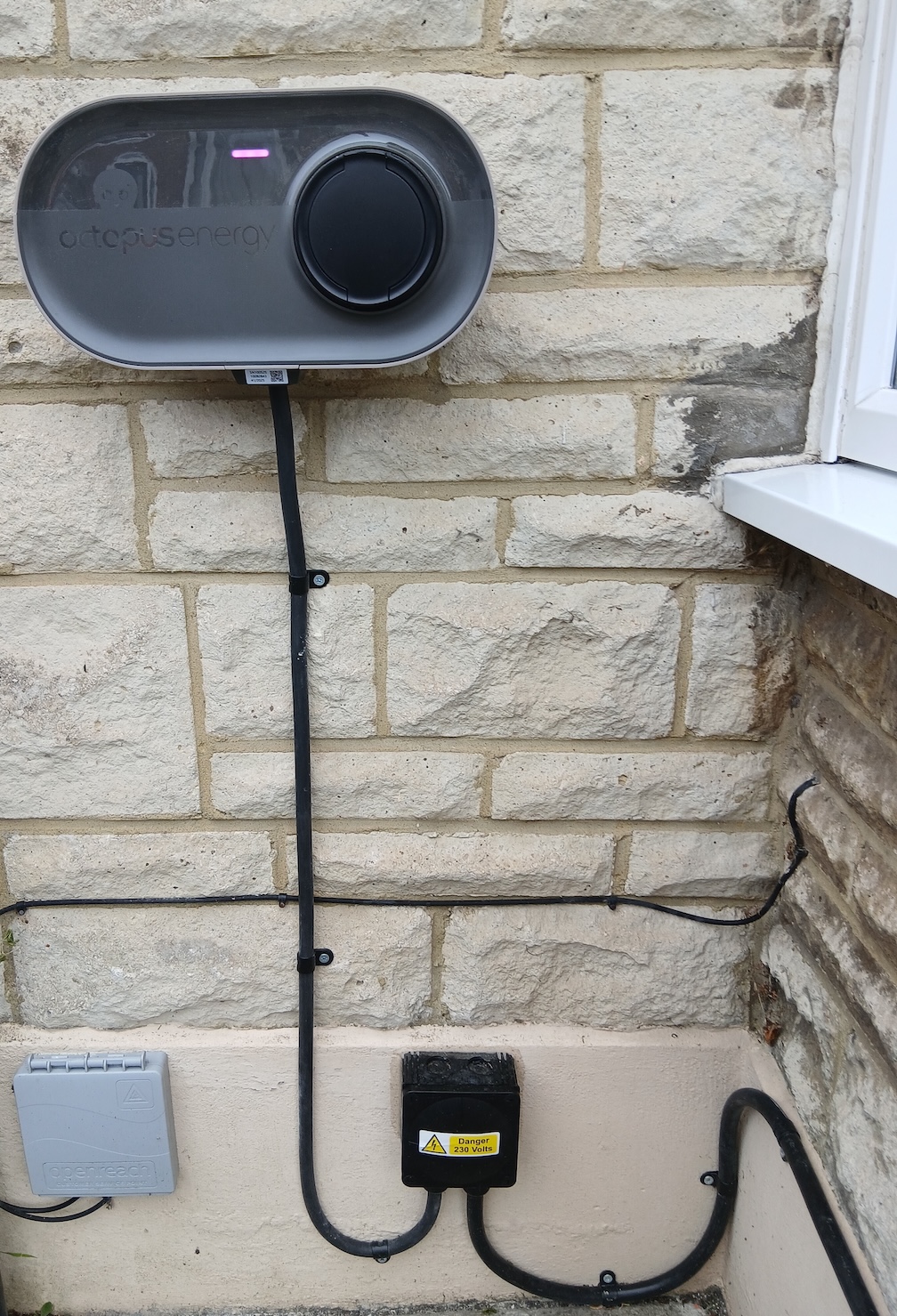
I am with Octopus Energy, so this article is based around their setup; other energy suppliers do similar things with EVs and their use.
As soon as I had decided to change the car, I arranged to get a home charger installed (pictured above) – this took 6 weeks as there has been a surge of requests recently. In order to get the convenience of the cheapest overnight rate on a smart tariff (recently upped to 8p per kWh), I also had to organise a change to a smart meter, which took a couple of weeks to happen, but before the charger arrived.
The other thing I did straightaway was to sign up with Octopus Energy’s Electroverse app and card.
There is no need to be a customer of Octopus to sign up. Your payment method is recorded – either to a debit or credit card or energy account – to make it easy when at a charging point away from home. The card enables charging at various sites throughout the UK and Europe, and they also arrange discounts through some suppliers. The sites can be found on an interactive map. Clicking on a marked site shows any discount available, the number and type of charger, their current availability, and the cost. So if a charge is needed it is simple to find a nearby site and head for it with some confidence that a charger will be available. Further discounts may be available to customers on an Octopus Go energy tariff.
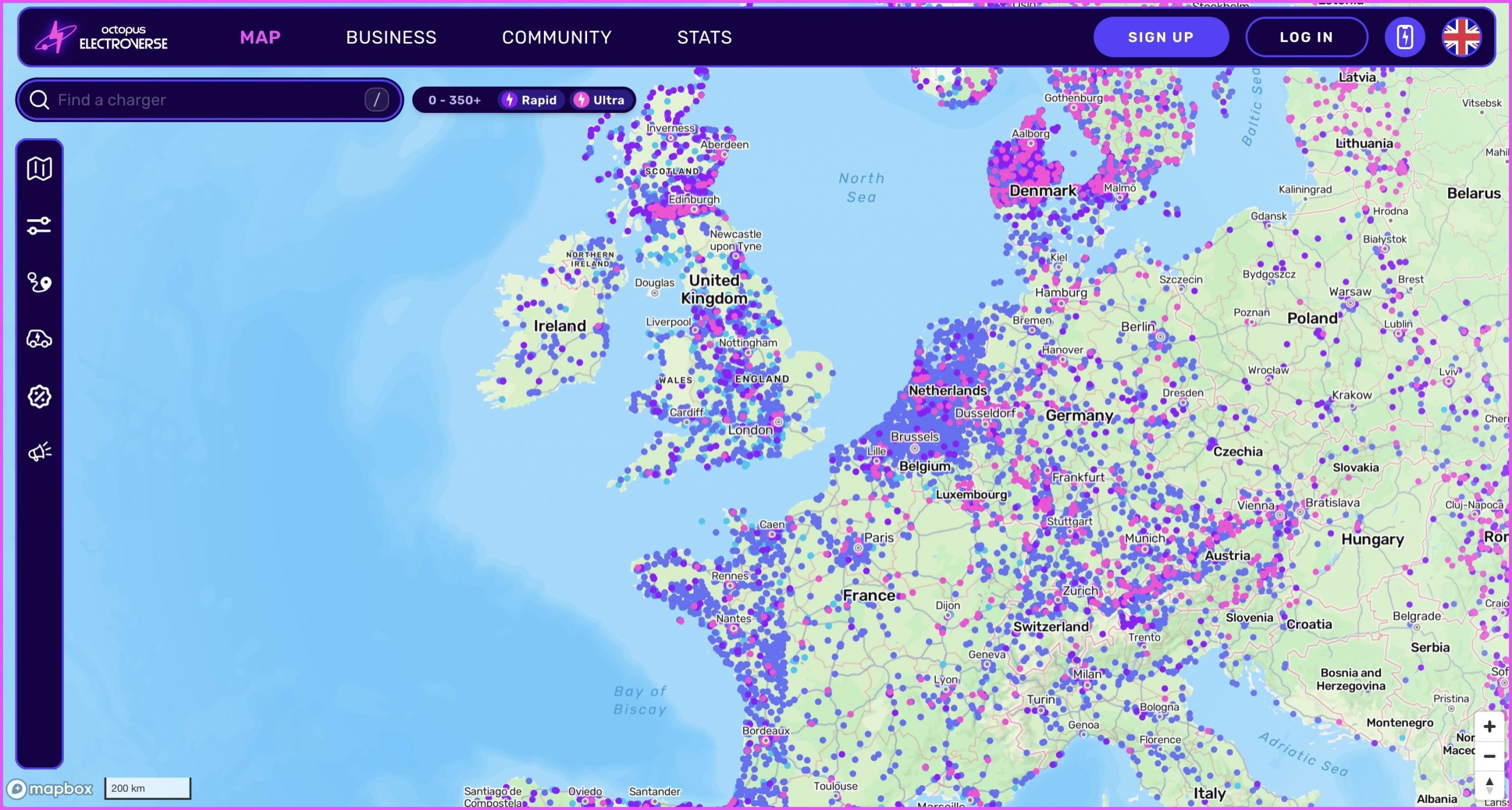
The distribution of charging points in the UK and parts of Europe. Funny how immediately east of the meridian line the charge stations are less frequent…
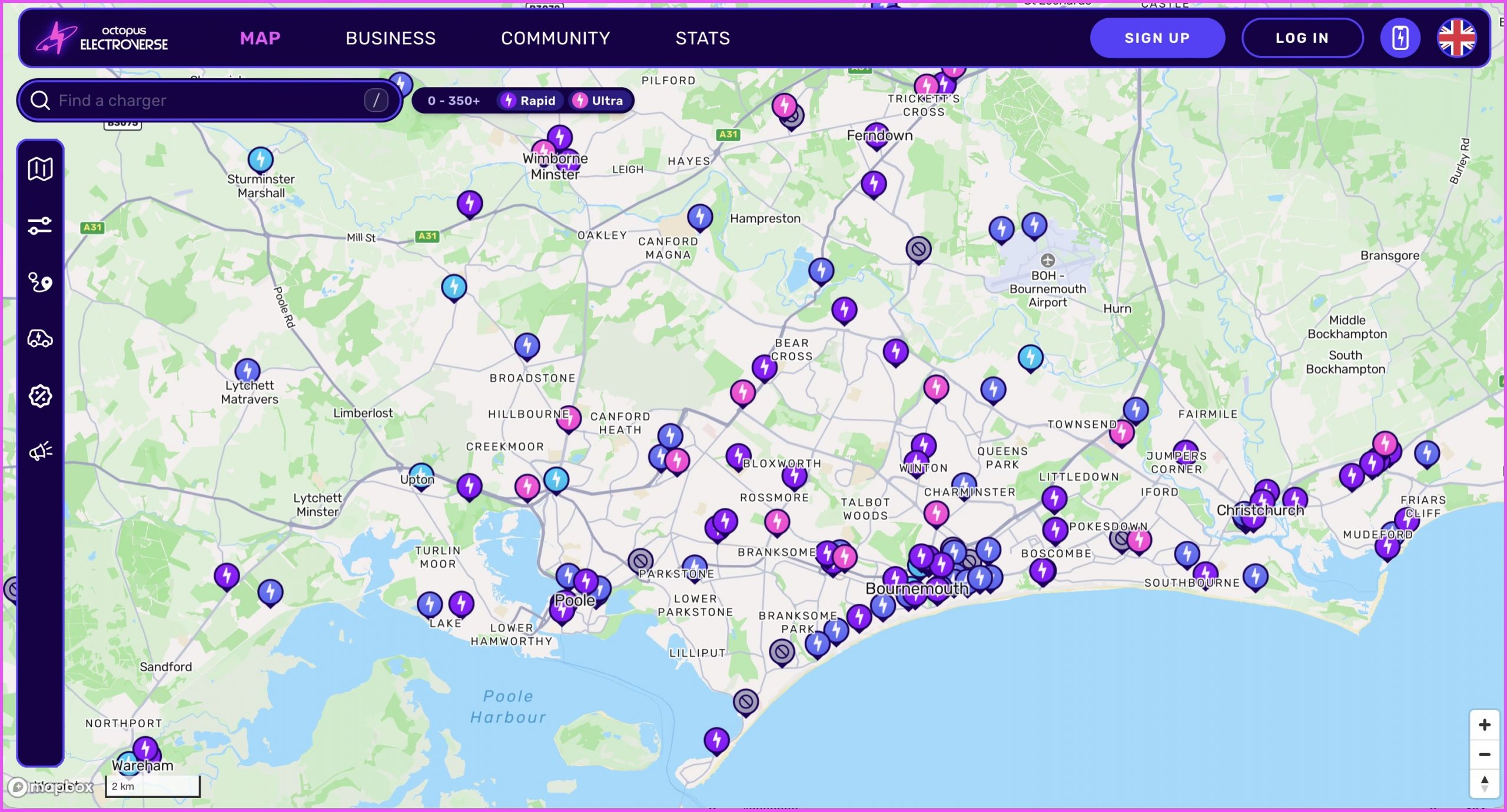
The above map is zoomed in, and shows public charging points around Poole. Note the greyed out symbols where some chargers are out of action. The colours on the symbols indicate the kW rating of the charger, where pink is the highest, and therefore the fastest.
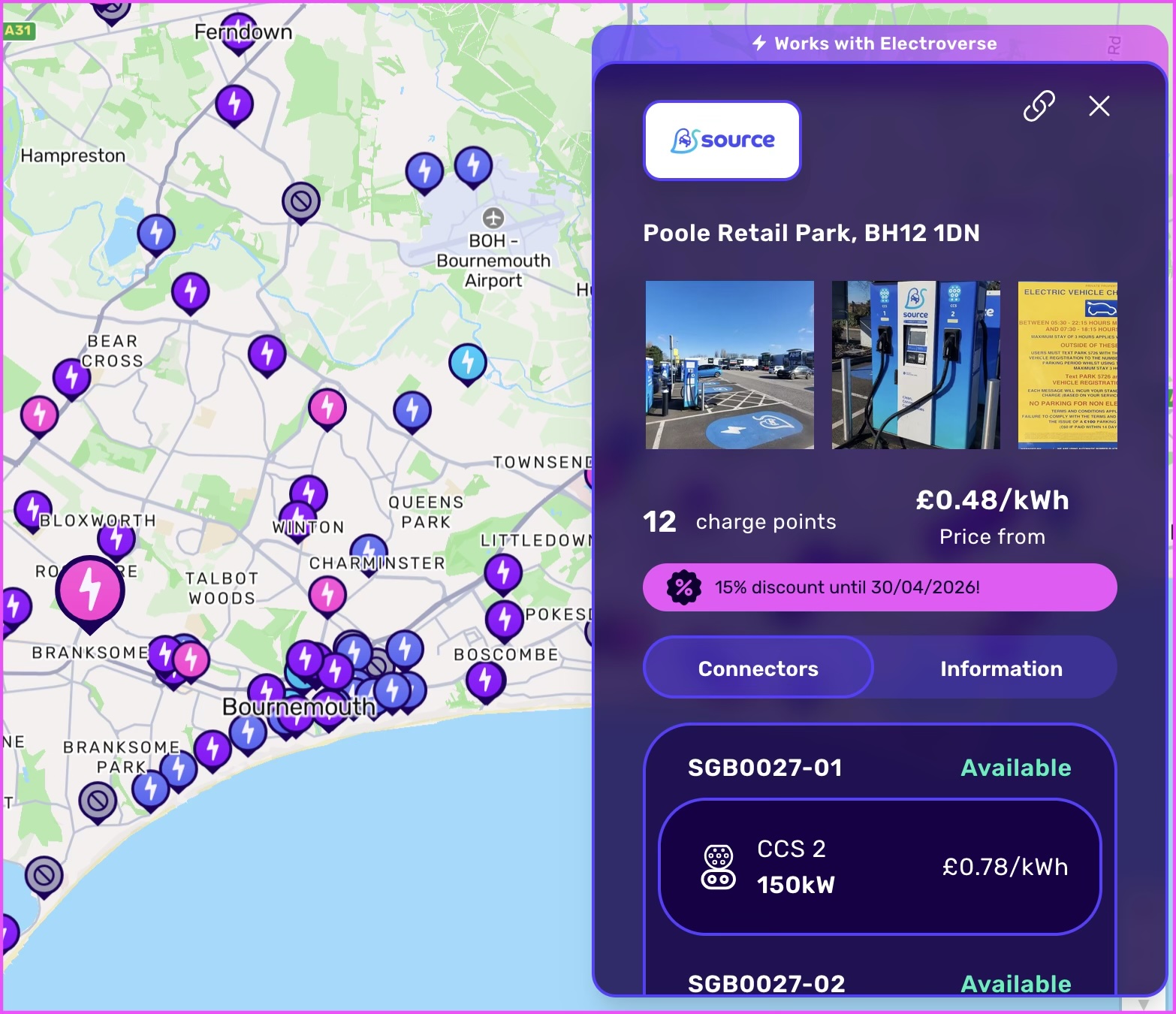
After selecting a charging site, details of all of the chargers there are displayed, complete with availability, kW rating, and cost per kW.
Charging away from home
I chose the site at a retail park for my first go at charging as there were 12 chargers available and most of them are rapid chargers rated at 150kW, but some are slower, rated at 22kW. The good news is that the charge worked almost first time just by tapping the Electroverse card on the reader and then plugging the giant lead into the car’s socket. I had to plug it in twice to get started. It took 30 minutes to get 30kWh worth of charge with a 15% discount. Whilst waiting, there were plenty of shops to visit, and the charging progress could be checked on the VW app on my phone. The required charge was set in the car to 80% of battery capacity, which is the recommended figure for optimum battery life, see below.
One thing I have noticed at some charging points is that the cables have been stolen by cutting them off. Such vandalised chargers should come up as unavailable on the Electroverse app. To counter this, the cables at this site were shrouded in a pressurised sleeve with a dye pack so that any attempt to cut them will result in a colourful outcome for the perpetrators.
Charging at home
The home charger I chose is an Octopus Charge, and I went for the untethered version, i.e. it has no cable permanently attached. (Please see photo at start of ‘Charging’ section). The charger needs internet access, so has a built in 4G Sim, so only needs internet access via wifi if the 4G signal is weak. This access allows for remote control of the charging cycle to match demands on the electricity grid, and controls who may use the charger. Once the charger and the Octopus app are set up, the car may be plugged in. The app requires that details of the car’s make and model have to be input. This is to allow the app to work out how much charge may be needed, and to control when the charge happens, but the VW app (more later on the apps) may control the stopping of the charge cycle. The ‘smart’ charging can be overridden if an immediate charge is required.
I’m still getting to grips with the charger, and did have one problem when I couldn’t remove the cable from it. This was resolved by a call to the helpful Octopus help line – their email help line was not up to the expected standard, and I found it better to phone if help was required.
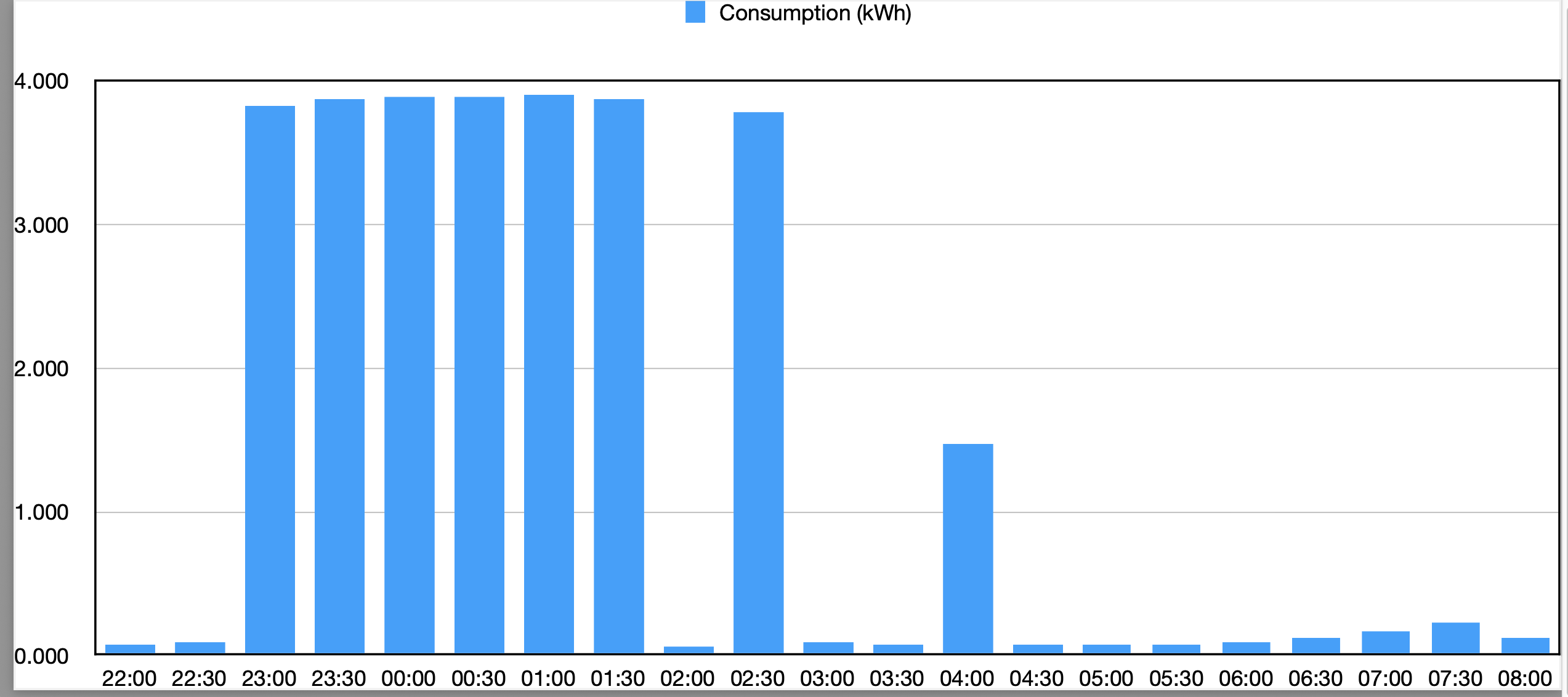
This chart shows the charging schedule applied for one night. Note that the charge was not continuous, spreading the load on the network. The charge finished when the battery reached 80%.
Breaking News…
As this was being written, Octopus announced a change in their charging tariffs. They say that because of the increase in EV car sales to being around 22% of new cars in March 2026, and because the mileage range of newer EVs is greater, there could be greater strain on the electricity grid with more cars that can be charged for longer. So better use of the existing network needs to be made. In order to do this, they will be changing to encourage EVs to be plugged in for longer at home, and then Octopus will schedule charging periods at times of lower usage such as overnight, or when generation is greenest. A 6 hour car charge off peak tariff will be introduced to match this. The overnight off peak rate will still be available for other domestic use. This change is being introduced in order to encourage more frequent, smaller top ups. In their words “The Golden Rule: Treat your EV like you’re sipping a nice drink, not downing it in one go. Plug in frequently for shorter bursts rather than waiting until the battery is empty, and you’ll get the most miles for the least money.”.
In addition, when the weather is particularly hot and sunny, there may be excess electricity being generated in the UK that could be exported via the European inter-connector. At these times, Octopus may have cheap rates for EV charging at home outside the overnight periods. So if an EV is plugged in, charging may be started during the day (at the same time, any other appliance being used when the EV is charging will also be at the cheap rate). All a bit confusing!
Smartphone Apps for EVs
With EVs, a smartphone is needed with several apps required to enable charging depending on where it is to be charged. So far I have got away with three, again based on Octopus Energy, and using the Octopus Charge charger:
There is a VW app that shows the current state of the car – %age charge left and range in miles, and where the car is! This is useful when at a public charging point as the progress can be checked if away from the car. The VW app can also be used to look for public charging points, and for route planning. The route plan (please see image below) also works out the likely miles to travel and the expected battery state at the start and end of the journey. In addition, settings within the car can be set remotely so that the car is warmed up and defrosted on a cold morning, or cooled down on a sunny day.
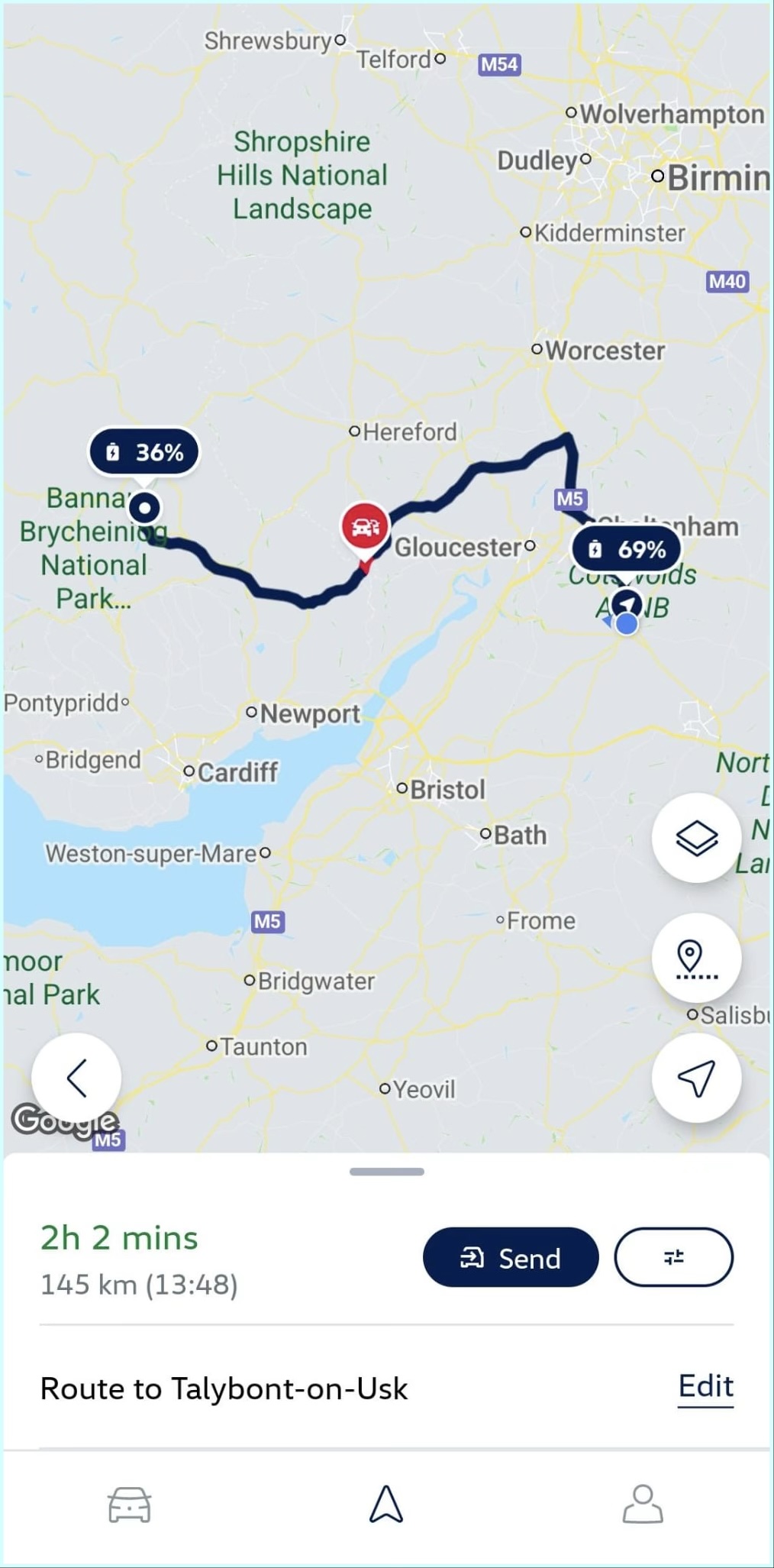
The route planner map on the VW app shows the approximate start and end charge of the battery, based on the data from the car.
The Electroverse app again shows public charging points as described above. A few charging points may have a parking charge as well as the cost of the electricity, but this will be stated in the details of the charging point. Route planning is also available with this app (please see images below).
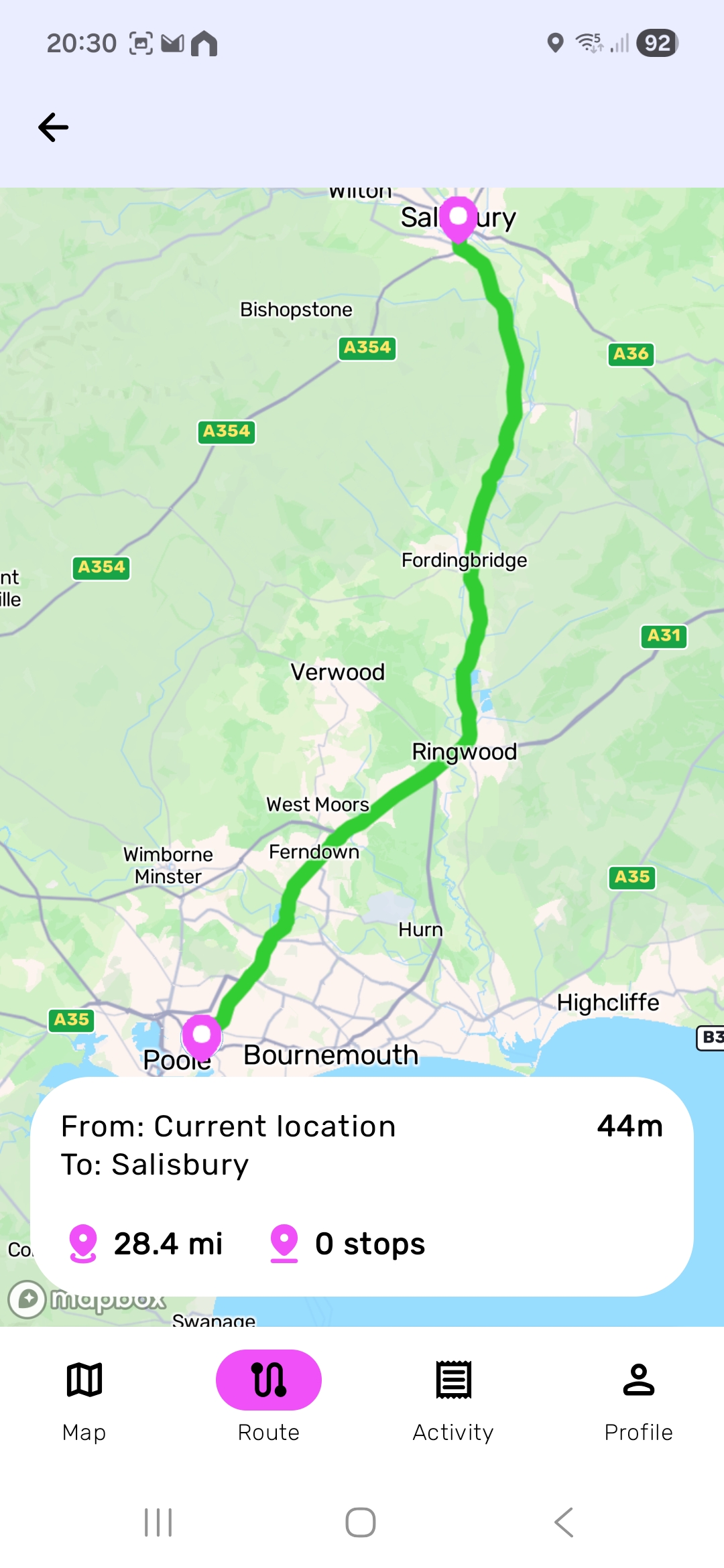
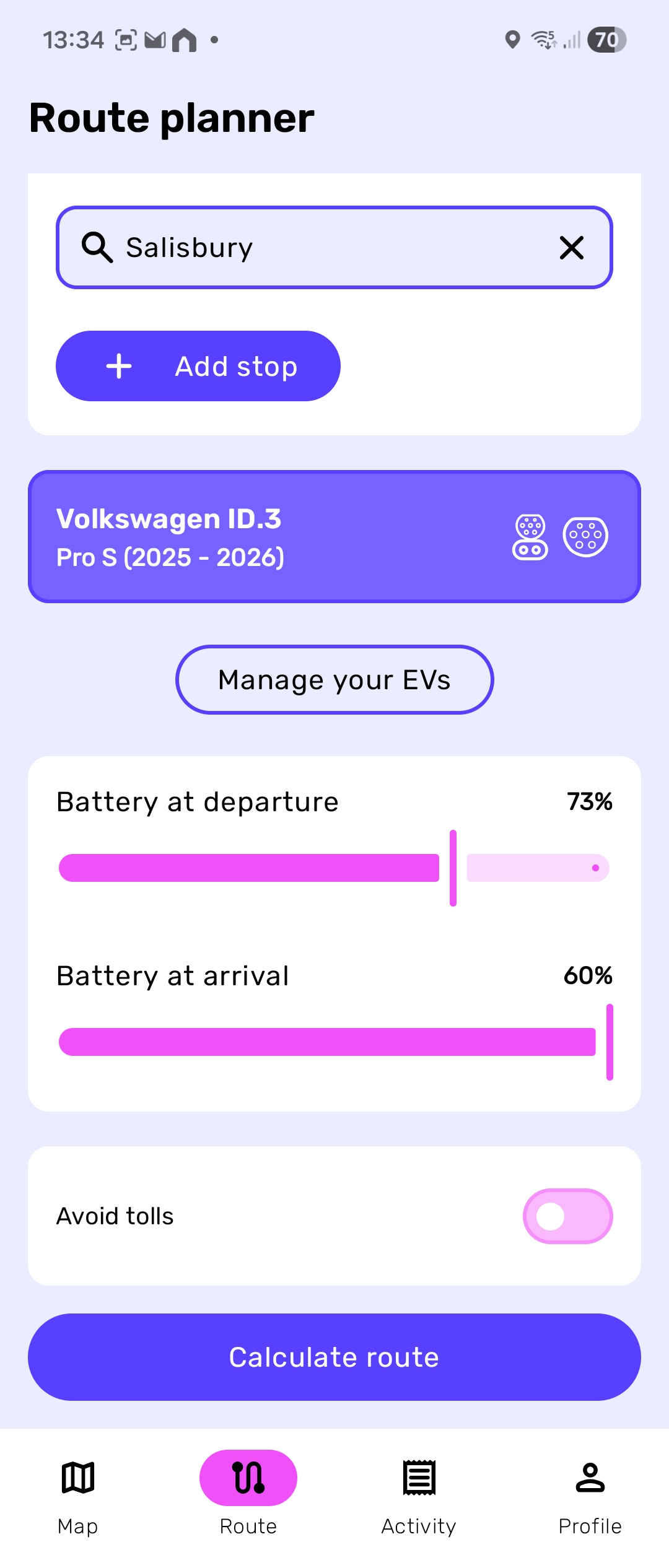
The Octopus Energy app is needed when charging at home, to set when an overnight charge is required, or an immediate boost, if needed. It allows ‘smart charging’ that will schedule to charge the car overnight at the cheap rate, or if there is a period of cheap or even free electricity during the day, charging can occur then, if the car is plugged in.
One anomaly that I have noticed is that the Octopus app asks for the percentage charge that is required. The VW app wants the upper charge level required. The Octopus app creates a schedule to charge at the cheap rate, so when time comes to stop the charge, whichever of the conditions from the 2 apps is reached first, stops the charge. For example, with the car at 50%, the VW app set to stop at 80% and the Octopus app is set to add 40%, the VW app will stop the charge. The Octopus app will message that the schedule has been set up, but in the morning will give a message that the charge was unsuccessful. However, if the car is at 50%, the VW app set to stop at 80%, and the Octopus app is set at 20%, the charge will stop when 70% is reached. The moral here is to do some maths to make sure the required target is reached!
Battery Range
The quoted range for this ID.3 is 351 miles at the Combined cycle. However, it is recommended that the battery should not be run down below 20% capacity, and not charged over 80% regularly, for optimum battery life. This means that the 351 miles range reduces to 210 miles (plus ~70 miles left in the battery) – occasional charging to over 80%, or using below 20% extends that range when needed. Around town driving increases the quoted range to 450 miles (270 miles with optimal charging). These figures are yet to be proven in actual use!
Cost per Mile
I have not yet worked out the actual cost per mile to charge the car. The long term usage stated in the car’s data is 3.6 miles per kW (it was bought as an ex-demonstrator, so had some miles on the clock). The electricity tariff varies from 8p / 32.72p per kW at home, to 48p – 78p (before any discount that may be available) per kW at a convenient public charger. So at 3.6 miles per kW, these figures indicate costs should be about 2.2p / 9.0p at home, or 13.3p – 21.7p per mile. A petrol car at 10 miles per litre at the moment would cost roughly 15p per mile, so home charging is the way forward.
There is also the issue of accurately calculating the electricity used for a charge at home – the bills only show what is used at the cheap or peak rate, not what is used to charge the EV. Normally the difference will be minimal on an overnight charge. The introduction of potential cheap rates during the day at periods of hot and sunny weather means that it is not possible to accurately record the actual electricity used to charge an EV if other appliances are being used, such as the washing machine, kettle, microwave, oven, etc.. But being able to charge a car at a cheap rate during the day could reduce household bills a bit, so a win anyway!!
The Future
One future idea is that an EV’s battery could be used to power a home when plugged in. Known as a bi-directional energy system, energy would be stored overnight at a cheap rate and available to be used at times of peak tariffs. Of course, this won’t be of any use to anyone who has to use their cars during peak times. More research is required before trying this out at home!