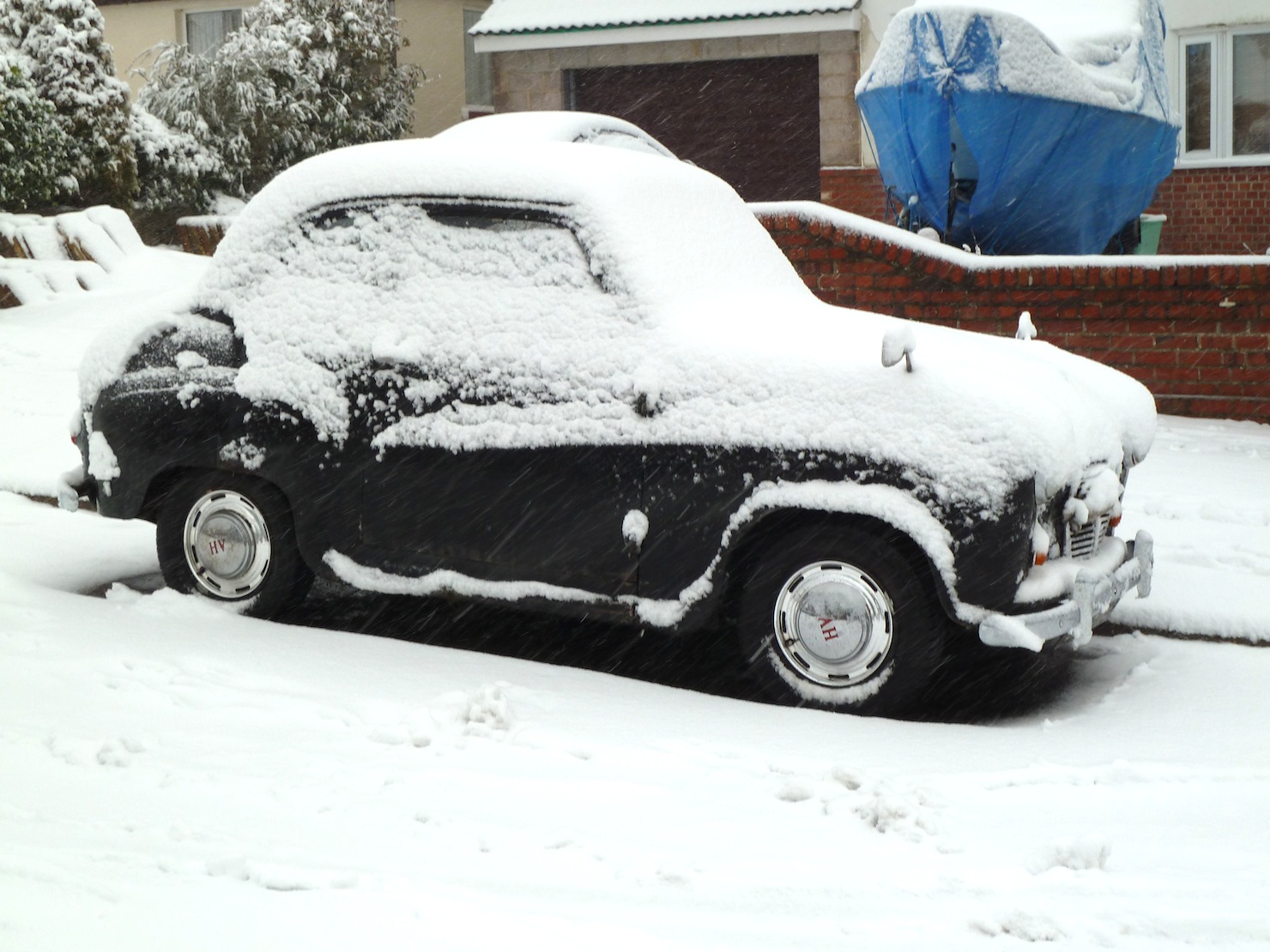
Kim Henson urges caution when motoring this winter…
Winter weather can make driving more difficult and hazardous than usual, but regardless of the age of your car, the following tips may help you to stay safe, keep you moving and protect your vehicle.
- BATTERY – IS IT IN GOOD CONDITION?
If you are unsure about the condition of your car’s battery, have it checked NOW (free of charge at battery suppliers), and renew it, or have it renewed, if it is ailing. If your car’s engine already cranks slowly during starting, even with temperatures above freezing point, you will find it much more difficult or even impossible to start it if the weather gets colder.
IMPORTANT NOTE: If you drive a modern car (typically post-2010 or so), bear in mind that many engine management systems can be damaged by attempting to start a car with a battery that’s below par, voltage-wise, and/or during jump-starting (in any event consult your car’s handbook before even attempting to jump-start a modern vehicle, and adhere strictly to the recommendations given in the handbook).
- ANTI-FREEZE? IT CAN SAVE YOUR ENGINE…
Untreated water freezes at 32 degrees F or 0 degrees C, so at temperature readings at or below these, the water will turn from a liquid to a solid (ice). As it turns to ice, water expands, and can strip threads as it pushes outwards against water pumps (etc.) and can even split and totally wreck a cylinder block or other components, such is the huge force generated.
Water-cooled cars need to have anti-freeze mixture in the cooling system, all year round, but especially in the winter. If you are unsure whether there’s any, or enough, anti-freeze in yours, buy an anti-freeze tester (inexpensive; available from car accessory shops) or get your vehicle checked NOW by a mechanic or garage, and have the system topped up, or the coolant changed, if necessary. Always check the anti-freeze use recommendations in your car’s handbook and on the product container.
It’s important to use only the correct type of anti-freeze suitable for your vehicle – again check your handbook for specific advice or consult a trusted mechanic. Many vehicles produced since about 2000 (and some before then) require red ‘OAT’ (‘Organic Acid Technology’) anti-freeze, which is longer-lasting but unsuitable for many older vehicles.
- TREAT LOCKS, CATCHES AND OTHER MOVING PARTS
Water can freeze within door, bonnet, boot and petrol cap mechanical locks and catches, also around handbrake operating mechanisms. The application of a few drops of oil and/or a marine type of grease will help prevent water from collecting around, and freezing within, handbrake operating systems.
Normal lubricants are not officially recommended for most locks (although water-dispellant sprays can help prevent moisture collecting within, and in any case can be useful in an emergency), but special, purpose-designed lubricants containing graphite powder or PTFE can be obtained to help prevent freezing/seizure of mechanical locks, and will also ease operation and protect the locks for the future too.
If a lock does freeze, the gentle, localised application of heat (from, say, a hot water bottle or a hair dryer/fan heater, if available) may help you get into the car or remove the fuel cap, when required! (This also helps if a door freezes hard against its sealing rubber… and to help prevent future sticking, sparingly apply a silicone spray to the rubber).
- KEEP THOSE WINDOWS CLEAR!
Ideally, overnight if a frost is forecast, cover the screens with purpose-made covers, and remove them just before you drive off.
Before driving, make sure that the front and rear windscreens, the side windows and the rear view mirrors are all clear of ice, snow and condensation. To avoid the need for scraping with an ice scraper, or applying de-icer spray, the use of an electric fan heater, placed inside the car and operated on a LOW setting for about 20 minutes will usually do the trick. Some motorists advise starting the car’s engine and running it for several minutes to warm up the heater/demister system before they drive away. If you do this, or if you use a fan heater in the car, DO NOT leave it unattended or unlocked, especially if the keys are in the ignition. Many cars have been stolen while their owners have ‘popped indoors’ for a minute in such circumstances… Sad but true.
DO NOT operate your windscreen wipers before gently easing the wiper blades from the glass. If they are frozen to the glass the wiper blades and arms, plus the screenwiper operating mechanism, may be damaged by the excessive strains imposed by trying to shift the ice).
Make sure too that the wiper blades are in good condition and not leaving gaps when the wipers are operated; check also that the wiper arms are applying sufficient pressure to the blades to fully clear moisture from the front and rear screens.
If you have a modern vehicle, the door-mounted rear view mirrors may incorporate heating elements that operate at the same time as the heated rear screen. Turning on the heated screen switch may quickly dispel ice from the mirrors too… Your car may also have a heated front screen; these are brilliant – check your car and the handbook to see if you have one!
- ALLOW THE ENGINE TO WARM UP GENTLY
Even if there is no ice on the road, do not drive the car hard just after starting the engine from cold. It takes a while for the oil to warm up and circulate as designed, and during this period wear rates are high. Minimise wear and damage by taking it easy for the first few miles from a cold start.
- GO EASY
Ice on the road surface can be lethal, especially ‘black ice’ which is invisible. If it is clear that the outside temperature is below (or even near) freezing point – as indicated by dash displays in many modern cars – treat all the vehicle’s controls VERY carefully. Accelerate, brake and steer with great care, keep your road speed to a sensible minimum and leave generous gaps between your vehicle and others on the road – just in case…
Cars can also skid or ‘aquaplane’ (effectively, sliding on a film of water with little steering control possible) when road surfaces are wet; reduce speed and drive accordingly to avoid such problems!
If you have never before experienced skidding in a car, consider taking a skid pan course (available around the country) which will help you through such situations and allow you to experience (and control) a vehicle sliding in safe conditions. This will prepare you well in case you ever need to safely deal with a skid when out on the road.
- DON’T ASSUME THAT TECHNOLOGY WILL SAVE YOU
The many modern technologies and safety systems incorporated within recent cars can help (for example, anti-lock brakes and traction control systems), but these will not and cannot over-rule the laws of physics. Ultimately your car is running on four small patches of rubber, and in conditions where friction is low, the car will still slide if being driven too fast for the conditions, and/or can get stuck on slippery surfaces if none of the four wheels can gain traction…
- STARTING ON SLIPPERY SURFACES
If the driving wheels spin when you attempt to start the vehicle moving on slippery surfaces, as far as possible reduce the engine revs and if necessary engage second gear rather than first. If the wheels are stuck in a rut or low spot on the road, sometimes you can ‘rock’ the vehicle backwards and forwards by alternately using forward and reverse gears, to get you moving again.
Some vehicle transmissions come equipped with ‘snow’ settings (or similar); consult the car’s handbook and engage such systems, where fitted.
It can be helpful to carry in the boot some short lengths of old carpet, and/or some sand/grit, to place beneath the driving wheels, to give them grip when needed.
- MAIN ROADS ARE USUALLY BEST IN SNOWY/ICY CONDITIONS
If it is icy and/or snows heavily, there’s usually more chance of well-used main roads being kept clear by snow ploughs than minor routes. Equally though, in hilly districts most heavy lorries stick to main roads and often a number of ‘heavy’ vehicles are brought to a halt together by slippery surfaces on inclines. In all cases, listen to radio programmes to hear area-specific traffic reports of road conditions, and plan/revise your chosen route accordingly.
- IF CONDITIONS ARE BAD, DON’T DRIVE IF YOU DON’T NEED TO…
Think carefully before you venture out. Listen to/watch/keep up to date with the weather forecasts, and take heed if it is likely or even possible that temperatures will plummet and road conditions worsen. If you don’t need to drive in very poor conditions, stay at home (or wherever you are) until they improve; don’t risk having an accident or getting stuck somewhere.
If you MUST travel in very cold conditions (especially if travelling a long way and snow/ice is forecast along your planned route), ensure that you have with you a mobile phone that is fully charged (plus a ‘car’ charger for it), warm clothing, suitable footwear for cold conditions, a warm blanket, a flask containing a hot drink, some food, a first aid kit, and jump leads or a jump pack.
TAKE CARE!!
PLEASE DRIVE CAREFULLY and make safety your main priority – for you and other road users. Look after your vehicle too – and it will look after you.
Safe travelling!