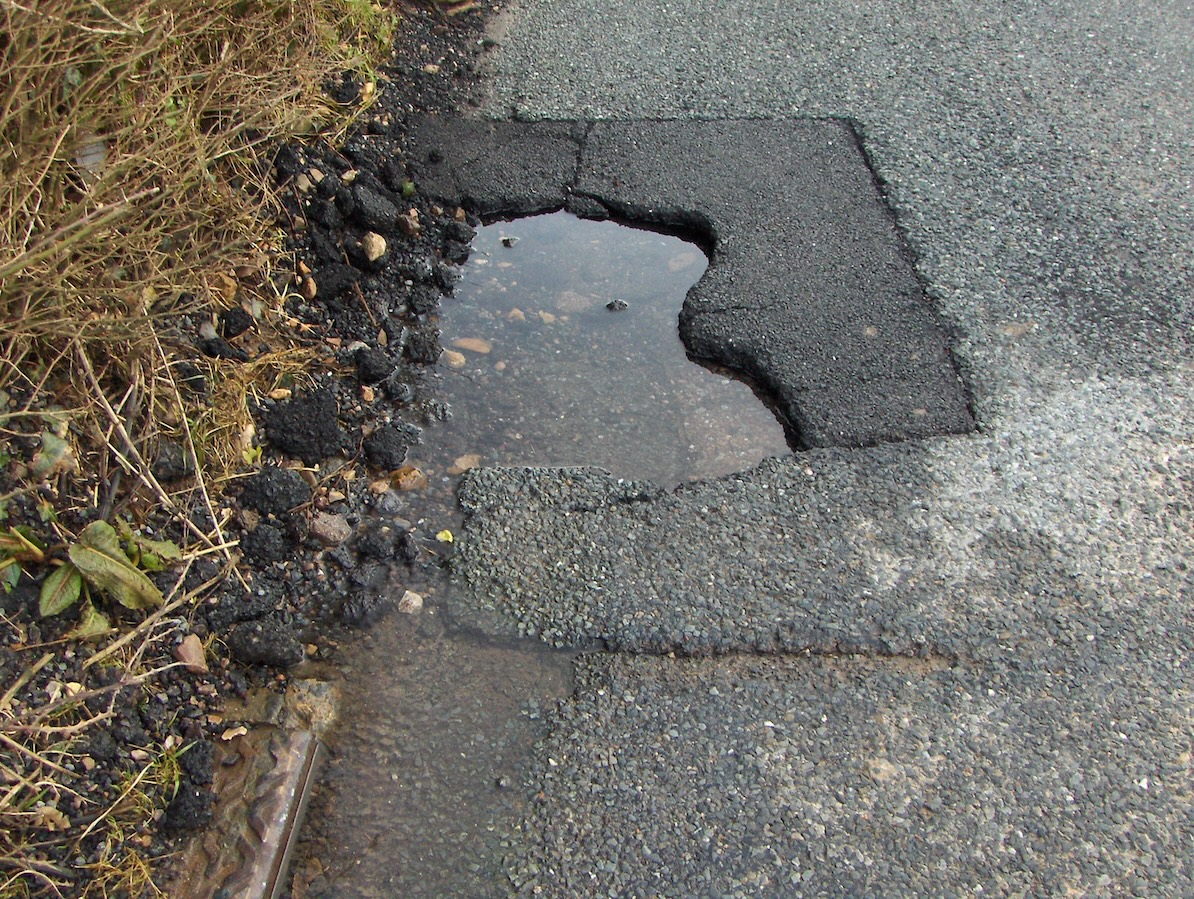
Just how well is your council fixing local road potholes? – by Dave Moss.
It was National pothole day on January 15th (yesterday as this was being written), and according to new analysis of the latest AA Pothole Index, last year UK drivers were hit harder than ever by repair costs associated with pothole damage. The analysis estimated the financial impact of potholes on vehicles reached £589 million in 2025, up from £579 million in 2024, and £474 million in 2023.
The index reveals the AA attended 613,638 pothole-related breakdowns in 2025 – averaging 1,681 every day. Its established methodology, using newly updated repair charges, indicated the average cost was £350 per incident, with pothole-related repairs attended in 2025 costing an estimated £215 million. Upscaling these figures to represent all UK drivers suggested an estimated £645 million was spent on pothole repairs in 2025, a £66 million increase over 2024.
The worsening situation led the “Pothole Partnership”, founded by the AA, JCB, British Cycling and the National Motorcyclists Council, supported by TyreSafe, IAM RoadSmart and others, to call for a step change in road maintenance standards. It is urging local authorities and contractors to move away from short-term “patch and run” repairs, instead adopting permanent solutions, including five-year warranties on all non-emergency pothole repairs, to ensure defects stay fixed and public money is spent more effectively.
That step change could be on the way – as this same week the Government has reiterated its record investment of £7.3 billion for local road maintenance – alongside a new “traffic-light” rating system, indicating how well councils are maintaining local road networks. This new system, involving an interactive national map, means road users across England can now easily discover just how well any local highway authority is getting to grips with the country’s pothole epidemic.
The new maps grade all 154 local highway authorities red, amber or green, based on current road conditions in their area. Just how effectively they are now spending the government’s recent multi-year funding payout is also considered and explained, through reports provided by the Councils themselves, The cash is intended to both fix potholes, and invest in long term measures to maintain and improve the condition of the nation’s roads. These arrangements are also intended to help highlight and focus best practices for such work, encouraging councils to improve their road maintenance performance.
The government reckons its £7.3 billion of funding, phased over several years and requiring councils to meet targets to obtain full annual payouts, is enough to renew and improve tens of thousands of miles of roads, and will promote more effective pothole repair by moving away from expensive, short-term repairs and towards investment in longer-term preventative measures.
Announcing the interactive map’s introduction, Transport Secretary Heidi Alexander said: “For too long, drivers have paid the price because our roads were left to deteriorate. I have heard time and again their frustration on footing the bill because they hit a pothole – money they should never have to spend in the first place. We’ve put our money where our mouth is, increasing the funding for local highway authorities with £7.3 billion to fix roads and give them the long-term certainty they have been asking for. Now it’s over to them to spend the money wisely, and for the first time, we are making sure the public can see how well councils are doing in delivering the improvements they want to see in their local area.”
The rating system itself is said to be the first to indicate just where local authorities are excelling, and, crucially, where more must be done. Map ratings of red, amber or green result from assessments in three key areas – local road condition, how much each authority is spending on road repairs, and whether they are following best practice in maintaining their highways.
Those scoring green have already demonstrated they are following best practice, such as investing in more long-term preventative measures rather than just patching up potholes, while also maintaining good local road conditions, and making significant investment in road improvements. An amber ranking indicates general movement in the right direction, with some good qualities, but room for improvement in individual areas, while authorities rated ‘red’ are not yet meeting the expected standards in one or several areas. These include the current state of local roads, the authority’s plans for preventing potholes, and their investment in maintaining their local roads more widely. In this financial year, 16 local highway authorities were rated green, 125 amber, and 13 red.
To move these standards upwards, authorities currently rated red will receive dedicated support to bring them in line with best practices, backed by £300,000 worth of expert planning and capability assistance. This support will include peer reviews of status, with sector experts helping to improve processes by providing practical advice.
The Department for Transport requires all local highway authorities to publish information about their highways maintenance activities, to help local taxpayers see the difference that funding is making in their areas. Access to maximum funding allocations is being incentivised by links to council performance, encouraging them to get on with the job of efficiently repairing and maintaining their roads. Some £125 million – around 25% – of local highway authorities’ £500 million funding for the 2024-2025 financial year – had been retained until their transparency reports were published, though all had been submitted by December 2025, allowing release of all outstanding cash.
Unsurprisingly, the new maps have been widely welcomed by organisations representing road users. The RAC’s Head of Policy, Simon Williams said: “These new ratings are a positive move that will help drivers understand how councils are performing when it comes to improving the state of local roads. While there are examples of good road maintenance practice taking place, this isn’t consistent across the country, and means drivers have, for too long, been left with substandard roads. “We hope this initiative, plus the promise of longer-term funding for councils to allow them to plan and carry out much-needed preventative maintenance, means we’re finally on the way to having smoother, better roads.”
References:
The interactive map can be seen here:
local-road-maintenance-ratings-map/index.html
A breakdown of regional funding allocations for the next four years is available here:
highways-maintenance-funding-allocations
Full details of the ratings for all 154 councils are here: (Notes and an alphabetical councils list )
local-road-maintenance-ratings/local-road-maintenance-ratings-2025-to-2026
Technical information about how the ratings were calculated can be found at:
methodology-used-to-calculate-ratings-for-local-road-maintenance
Templates of the transparency reports that councils are required to complete can be viewed here: