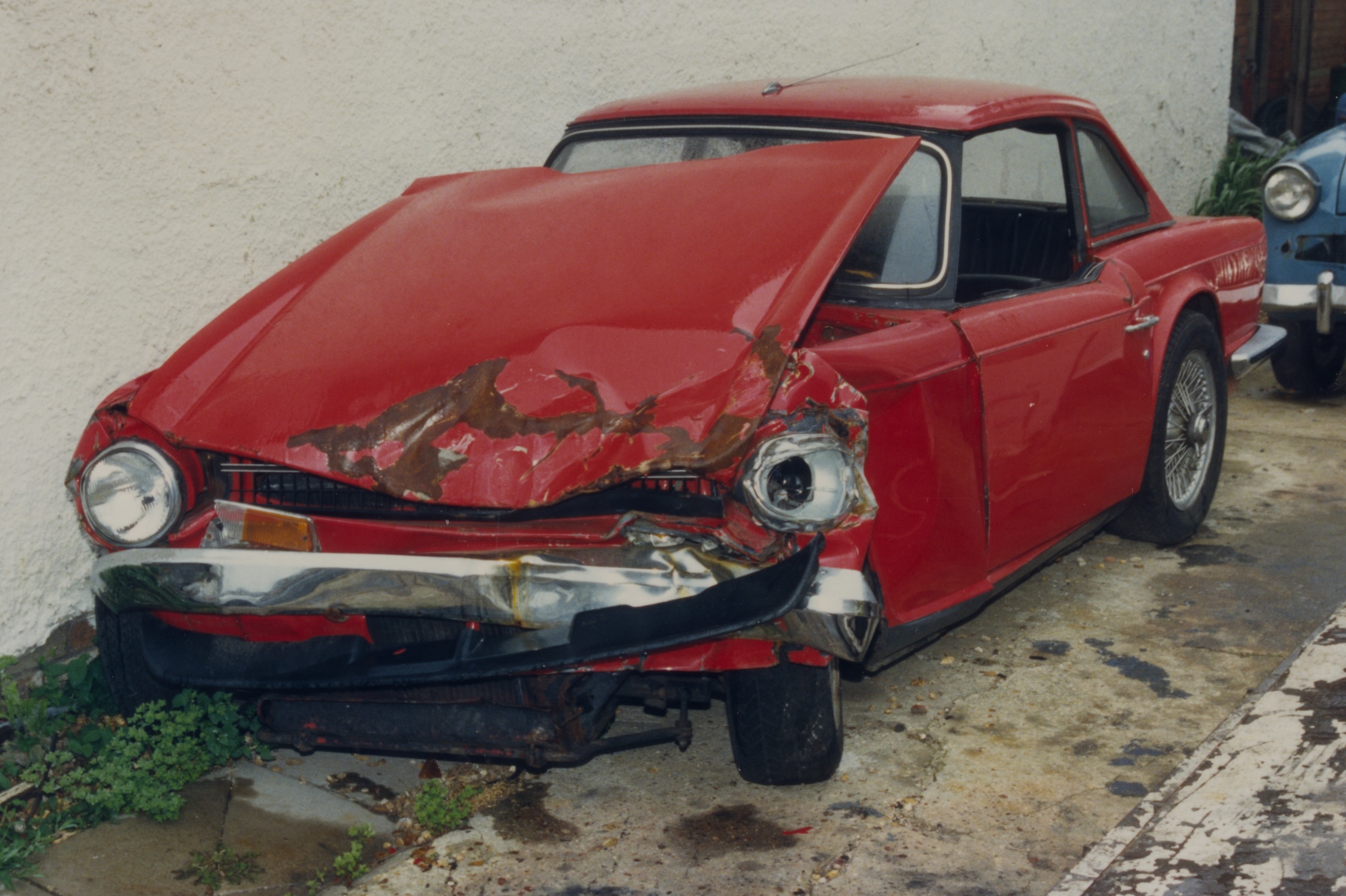
Dave Moss reports…
It is well over 10 years since the last formal road safety strategy was published, a gap which has led road safety professionals inside and outside officialdom to become openly and increasingly concerned about the lengthening absence of any Government-led definitive aims, topics and targets – or even guidance – to help their never-ending work to reduce deaths and injuries on British roads.
That changed on January 7th, with the publication of a 60 page blueprint, mapping out inter-related plans which the Government claims will help save thousands of lives, as well as delivering on their wider commitments to growth and safer communities – and easing pressure on the NHS.
Over the past decade, as Britain has slipped from third to fourth in European road safety rankings, 22 European countries have made more progress in reducing road fatalities. The newly announced strategy is guided by an equally new long-term ambition: For nobody to be killed or seriously injured on Great Britain’s roads, underpinned by adoption of the Swedish-developed but nowadays internationally recognised “Safe System” approach to road safety. This has at its heart an acknowledgement that while human error is inevitable, deaths and serious injuries are not. Rather than placing responsibility solely on individual drivers, this system looks to ensure that road design, vehicle safety, enforcement and education work together as far as possible to protect all road users, from pedestrians upwards, following the hierarchy first seen in the recently updated Highway Code.
The first headline target for this new approach is extremely challenging: A 65% reduction in deaths and serious injuries on British roads by 2035, with an even more challenging sub-target of a 70% reduction for children under 16. Implementation of the new strategy is planned around four specific themes, with the government pointing out that road safety overall is not just the responsibility of central government, or those who use the roads, but is shared amongst a wide and diverse range of people and organisations. These range from planners and designers to local and national authorities, researchers, and emergency services. Between them they respectively up the infrastructure and provide enforcement plus emergency help and care. Thus, it says, the new road safety strategy is a call to action: To work together to reduce casualties and improve safety on roads in Great Britain.
Note: The following two graphs are from the Road Safety Strategy document.
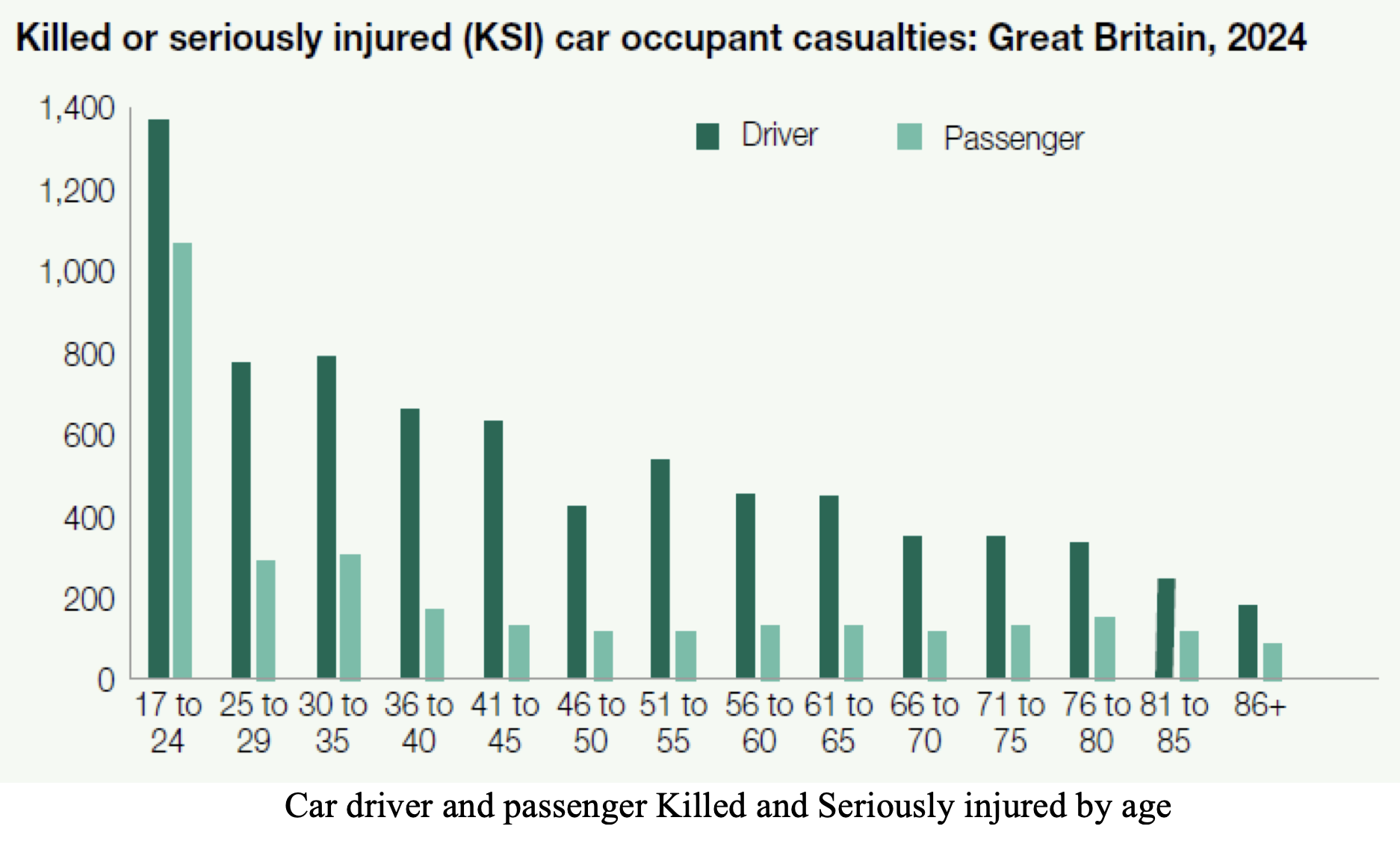
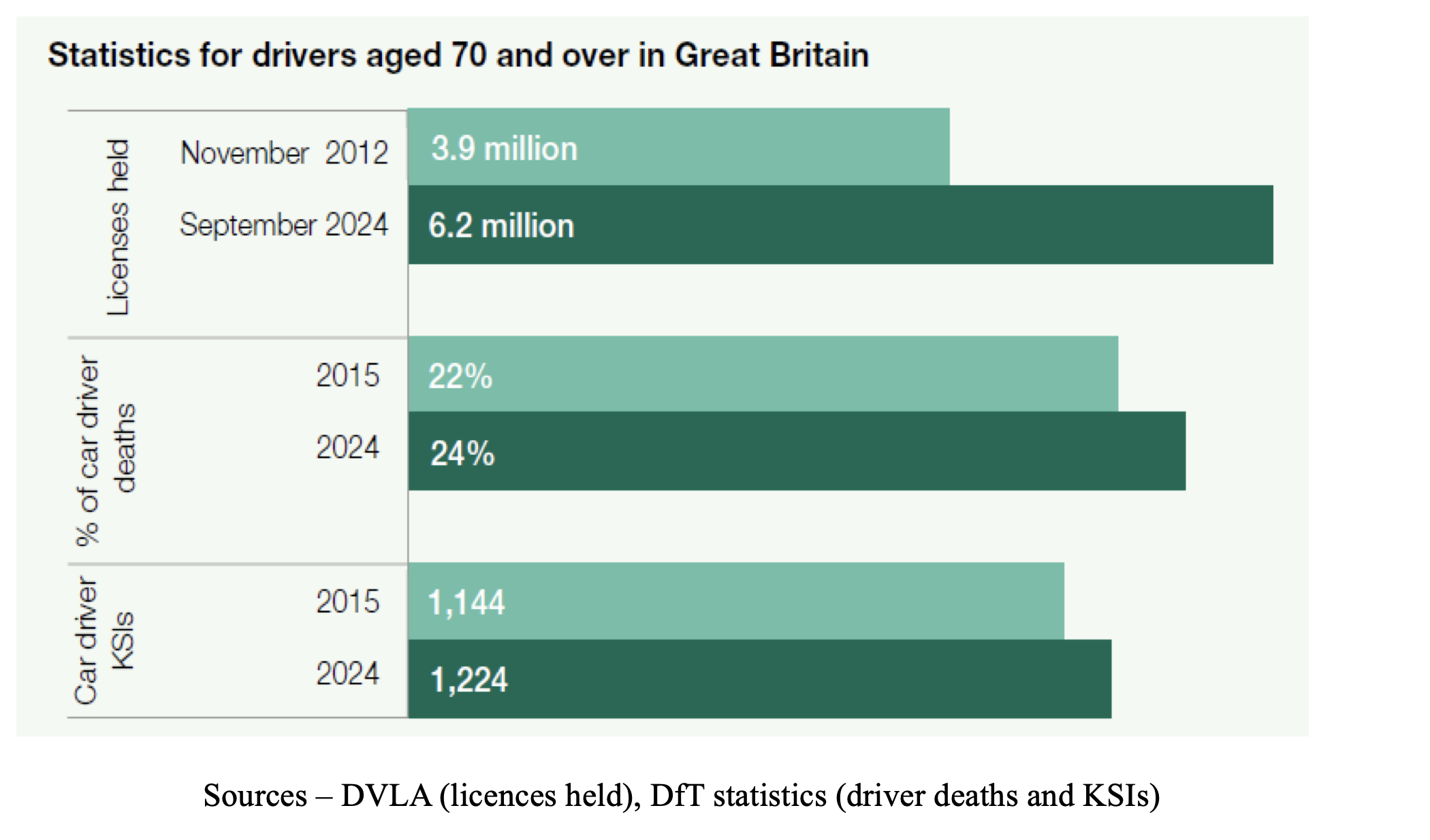
Altogether 35 action points are contained within the four themes, and inevitably, every road user, on foot, two, three, four or more wheels, will have their own views on their relative importance. Here we summarise 20 key points from those themes; the full Road Safety Strategy document can be viewed via a link in the ‘references’ section.
In Theme 1, “Supporting road users”, highlights among eleven listed points include…
- Consultation on reforms for the training, testing and licensing regime for category A motorcycle licences.
- Consultation on introducing a three or six month minimum learning period for learner drivers, and a lower blood alcohol limit for novice drivers;
- Consultation on introducing mandatory eyesight testing for drivers over 70 years old, as well as developing options for what is described as “cognitive testing” for older drivers;
- Working with the National Police Chiefs’ Council to highlight the importance of regular police roadside eyesight tests for all drivers – and ensuring that drivers failing to meet the minimum required eyesight standards for driving have their driving licence revoked.
In the nine points listed under Theme 2, entitled “Taking advantage of technology, data and innovation for safer vehicles and post collision care”, highlights include…
- Consultation on mandating the fitment of 18 new safety technologies for specific vehicle categories – including private cars;
- Collaboration with stakeholders to maximise safety benefits of ADAS technologies, and with industry to provide clear, accurate information about such systems’ functionality, limitations and user responsibilities;
- Establishing a data-led Road Safety Investigation Branch for Great Britain;
- Collaboration with stakeholders and vehicle manufacturers to further understand safety concerns regarding increasing vehicle size;
- Undertaking further research aimed at identifying vehicle design factors responsible for increased headlamp glare;
- Driving forward amendments to international regulations to ensure equal protection for all vehicle occupants through improved crash testing.
There are just four points in Theme 3 – “Ensuring infrastructure is safe”. Motorists will surely wait with bated breath for the outcome of “updated guidance on speed and red light cameras” following the recent National Highways revelation that technical issues over a period going back years have resulted in some “smart” motorway speed cameras wrongly issuing tickets to thousands of drivers…
- To publish a new edition of the best practice guidance ‘Setting Local Speed Limits’ and update separate guidance on the use of speed and red-light cameras;
- Explore whether the proposed rural roads categories are appropriate at a local level and assess their potential for national application;
- Publish an updated “Manual for Streets”, and embed it within the planning policy and guidance framework.
Theme 4 underpins the whole strategy, detailing a general review and “toughening up” of legislation in areas where existing law is perceived as inadequate or out of date. It is over 35 years since the motoring offences framework was last substantially changed, at the introduction of the Road Traffic Act 1988, and the Road Traffic Offenders Act 1988. The stated ambition here is “to ensure that penalties are appropriate to harm caused, and that they act as a suitable deterrent.
Key points amongst ten topics under the theme heading “Robust enforcement to protect all road users” include:
- Consultation on tougher action against drink driving by lowering the drink drive limit in
England and Wales, and including an even lower limit for novice drivers;
- Reviewing the penalties and mandatory training for drink and drug driving offences, which will include consulting on the use of vehicle alcohol interlock devices;
- Considering introduction of new powers to suspend driving licences for:
those suspected of committing a drink and/or drug driving offence until attendance at court or a guilty plea, or if bailed pending forensic analysis being undertaken; and
those under investigation for the most serious motoring offences resulting in a fatality or serious injury;
- Consideration to be given to exploring alternative methods for drug/driving evidence collection and processing;
- Feedback to be gathered on…
…introducing penalty points for failure to wear a seat belt, and additional penalty points for drivers who do not ensure child passengers wear seat belts.
…taking tougher action on those who fail to stop and report collisions, those who choose to drive unlicensed or without insurance, and those driving with no MOT.
- Consultation on addressing problems of illegal number plates, including ‘ghost’ plates;
- The introduction of a new Roads Policing Innovation Programme;
Government statistics indicate that approximately 4 people die on Britain’s roads every day, and thousands are seriously injured each year. On launching the strategy, Secretary of State for Transport, Heidi Alexander, said: “Every life lost on our roads is a tragedy that devastates families and communities. For too long, progress on road safety has stalled. This strategy marks a turning point. We are taking decisive action to make our roads safer for everyone, from new drivers taking their first lessons to older motorists wanting to maintain their independence. The measures we are announcing today will save thousands of lives over the coming decade.”
For road users everywhere, parents, children, riders, drivers and non-drivers alike, it is surely encouraging that the Government has accepted that an updated safety action plan for British roads and road users was long overdue. It is encouraging too that it is both wide-ranging, and launched with opportunities for the public to comment through consultations on key proposed actions, even though some commentators are already suggesting that some proposals could prove controversial – and not necessarily always for reasons directly connected with road safety.
Nonetheless, the strategy has been well-received in the mainstream road safety movement, with Edmund King OBE, Director of the AA Charitable Trust and AA president, summing up the general view by describing it as: “a positively radical reframing of road safety, which is long overdue”. There has also been a wider welcome – in areas ranging from learner drivers to fleet operators.
Two of the five consultations currently open are especially high profile. The first centres on vulnerable road users – highlighted by the sad fact that although motorcyclists account for only 1% of motor vehicle traffic, they account for 21% of road deaths. Another sad fact underpins the second – proposals to lower the drink drive alcohol limit in England and Wales. Today’s limit is now the highest in Europe, having remained unchanged since the “breathalyser” was first announced 59 years ago in 1967, and currently, one in every six road fatalities involves drink/driving in some way.
Amongst various other things this consultation explores the possible fitment of ‘alcohol interlock’ devices – to prevent intoxicated people from starting a car – fitted as a condition of being allowed to drive again after drink-drive offences. New powers are also being considered to suspend driving licences for those suspected of drink or drug driving offences.
A consultation on eyesight testing could prove controversial, since a Government “rapid evidence review”, commissioned in 2020 to understand the extent to which driver vision issues pose a road safety risk – but oddly only recently published – found ‘little clear evidence’ of a relationship between visual impairment and UK road collisions. The consultation considers possible mandatory eyesight testing for drivers over 70, which some see as a growing problem with rising older driver numbers as Britain’s population ages. However, the review found that cataract was the only condition clearly linked to higher rates of vehicle collisions.
The possibility of mandating no less than 18 recent vehicle safety technologies could also prove controversial, with the Government feeling drivers and road users will benefit from access to such technologies. There is no mention of curbing the oft-cited “nanny” effect, or the much-reported irritation factor caused by the large numbers of bongs, beeps, and false or irrelevant warnings that these systems seem capable of generating.
To oversee taking the strategy’s delivery forward, a new “Road Safety Board” is proposed, chaired by the Minister for Local Transport, and supported by an expert advisory panel drawing membership from local authorities, emergency services, active travel groups and road safety organisations. However, with complex topics to consider and multiple consultations under way, major action seems unlikely in the immediate future – or, as the Parliamentary Advisory Committee on Transport safety (PACTS) succinctly summarises it: “The strategy contains many further commitments that will require detailed work before they can be translated into legislation, regulation, and local delivery”.
References
Link to a downloadable PDF of the full 60 page Road Safety Strategy paper:
https://assets.publishing.service.gov.uk/media/695e2cff8832ab3a48513809/road-safety-strategy.pdf
Link to the Government’s eyesight “Rapid evidence review”
https://www.gov.uk/government/publications/visual-impairment-and-road-safety-rapid-evidence-review
Seven separate consultations were released by the Government at the time the Road Safety Strategy was announced. Five of these relate directly to aspects of the Strategy – as follows:
- Moped and Motorcycle Training, Testing and Licensing – proposals to modernise training, theory and hazard perception testing, licence progression, instructor standards, and the introduction of digital Compulsory Basic Training certification.
- Minimum Learning Period for Learner Drivers (Category B) – potential requirements for a minimum learning period, minimum supervised driving hours, and structured learning before taking the practical driving test.
- Mandatory Eyesight Testing for Older Drivers – exploring whether drivers over a certain age should undergo mandatory vision tests at licence renewal to ensure continued road safety.
- Changes to Penalties for Motoring Offences – reviewing existing penalties and enforcement for offences including drink and drug driving, seat belt use, unlicensed or uninsured driving, MOT non-compliance, and other road safety offences.
- Vehicle Safety Technologies in GB Type Approval – proposals to mandate advanced safety technologies in new vehicles, including emergency braking, intelligent speed assistance, lane keeping, driver monitoring, pedestrian and cyclist protection, and event data recorders.
The remaining two relate to other topics. These are consultations on:
- Powered Mobility Devices – a review of laws for powered wheelchairs, mobility scooters, and other mobility devices, covering terminology, where devices may be used, weight and speed limits, passengers, emerging technologies, and safety and enforcement considerations.
- Local Transport Authorities and Licensing of Taxis and Private Hire Vehicles – exploring whether local transport authorities should take responsibility for licensing taxis and PHVs to simplify and harmonise standards, enforcement, and passenger protections.
All these Consultations are now open, with similar closing dates of 31st March 2026.