• New Cars
    • First Impressions
    • Road Tests
  • Classics
    • Classic Profiles
    • Classic Driving Impressions
    • Classics Information
    • Events and Days Out
  • Motoring For Fun
  • News & Views
  • Bookshelf
  • Technical
    • Grumpy Old Mechanic
    • Kim’s Tips
  • Features
    • Visits
    • Track Days
  • Contributors
    • About our contributors
    • Kim Henson
    • Chris Adamson
    • Kieron Fennelly
    • Ant Henson
    • Rachel Henson
    • David Miles
    • Gerald Morgan
    • Dave Moss
    • Dave Randle
    • Robin Roberts
    • Tom Scanlan
    • Glen Smale
    • Jeremy Walton
    • Keith Ward
    • John Price Williams
  • More…
    • About Wheels Alive
    • Tips for using this website
    • Useful Links

Wheels Alive

Old cars, new cars, borrowed cars & blue cars. If it steers it's here!

Old cars, new cars, borrowed cars & blue cars. If it steers it's here!

Privacy & Cookies: This site uses cookies. By continuing to use this website, you agree to their use.

To find out more, including how to control cookies, see here: Cookie Policy

Snow and Ice? Five myths about road gritting, busted.

29th December 2020

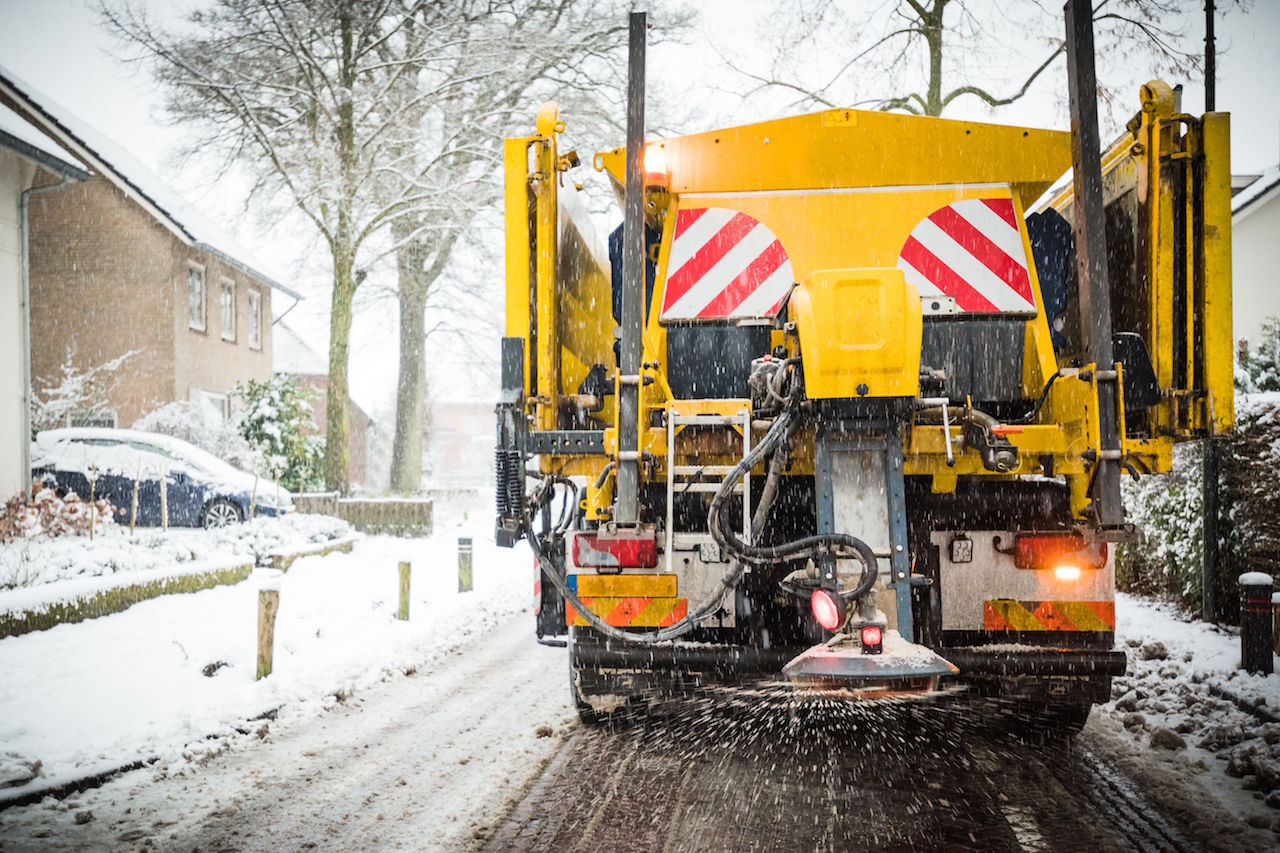
Winter weather sees gritting lorries out working on UK roads again.

What do you know about ‘gritting’? There’s more to it than meets the eye…

The onset of winter weather sees the return of gritting lorries on roads across the UK.  In addition to clearing snow and ice, specialist operators The Gritting Company are keen to dispel five myths about road gritting:
Myth 1: “The winter wagons contain grit.”  Untrue.  It’s not grit, it’s salt. The small stones that make up grit can leave a sticky residue with the risk of a slippery road surface. Grit can also block drains as it washes away.  The alternative is salt.  Brown rock salt (often mistaken for grit) is generally spread on large road surfaces because it is more economical.  White salt is more expensive and is more often used in the grounds of schools, hospitals and business parks, as it leaves less residue on floors and carpets when trodden in by pedestrians.

Myth 2: “Salt will melt ice at any temperature.” Not true.  Salt works by lowering the temperature at which water will freeze, and this prevents ice forming on the roads.  The more concentrated the salt, the lower the freezing point, but salt is less effective below minus five degrees Celsius.  At lower temperatures, ice and snow treated with salt melts less quickly.
Myth 3: “Once the salt has been spread on the road the ice will melt immediately.”  False.  The de-icing effect relies on the salt being crushed and spread by the passing vehicles’ tyres.  If the traffic is light, then the salted ice on the road will take longer to melt.
Myth 4: “Deep snow on roads will melt quickly with salt spread on it.”  Not true. Salt works best on snow that is less than 4 cm, and the traffic is needed to help distribute the salt.
Myth 5: “It’s too cold for snow.” True, but unlikely in the UK. Yes, there is a link between the temperature of the air and how much water it can hold.  But this is only true when the temperature plummets beneath minus 40 degrees Celsius, which does not usually happen in the UK.  When this temperature is reached, the air has so little moisture in it that snow can rarely form.

About The Gritting Company:

The Gritting Company www.gritting.co.uk is a division of JW Crowther https://jwcrowther.co.uk/, a specialised firm providing a range of environmental services across the UK.
Established in 1860, the JW Crowther business was acquired in 2020 by Ground Control which provides specialist grounds maintenance and commercial landscape services across the UK.
Save Post as PDF

Categories: News & Views Tags: grit, Road salt, salt, snow and ice

Tip: For improved search accuracy, enclose search terms for multiple words in quotation marks. For example:
"Land Rover".

Advertise with us

Recent Posts

Spare a thought for everyone working to keep us safe and mobile on the road this Christmas

Honda Civic 2.0 i-MMD ADVANCE – Road Test

Make sure that your presents sent abroad are delivered on time – and avoiding extra charges

Harbour Master’s Beaulieu River Patrol Boat is a new investment for Buckler’s Hard Yacht Harbour

More than half of UK drivers are to ignore tyre safety checks ahead of the festive get-away, reports The Motor Ombudsman

BMW 420i – Road Test

Free exhibition about the Buckler’s Hard 2025 archaeological dig now open

Jaguar Land Rover drives nature recovery in the National Forest

Contributors

contributors

Our well-respected contributors live and breathe motor cars; aren’t we lucky?

Contributors to the site include talented, highly-respected people (so they tell me) on the hallowed membership list of the Guild of Motoring Writers, and from the similarly well thought-of Western Group of Motoring Writers. In addition there are valued contributions from other knowledgeable and capable motoring writers who have something useful to say about all aspects of driving and running vehicles in the 21st Century. All of our team are passionate about motor cars!


Read about our contributors  ››

Tags

all-electric Coupé large SUV Suzuki Kia The Motor Ombudsman City car estate 4x4 Seven seater SUV saloon Electric First Impressions National Motor Museum plug-in hybrid five door hatchback Estate car Beaulieu EV British Motor Museum Tyres MPV crossover Hybrid luxury SUV Compact SUV road test hatchback PHEV SUV

All Tags ››

Like us on Facebook

Like us on Facebook

Wheels Alive Social

  • E-mail
  • Facebook
  • RSS
  • Twitter

Please share our website

Contact us

We welcome your questions, comments and feedback. Please click here to contact us.

Advertising Opportunities

Please contact us if you would like to discuss advertising opportunities on Wheels Alive.

Copyright © 2025 Kim Henson, Wheels Alive