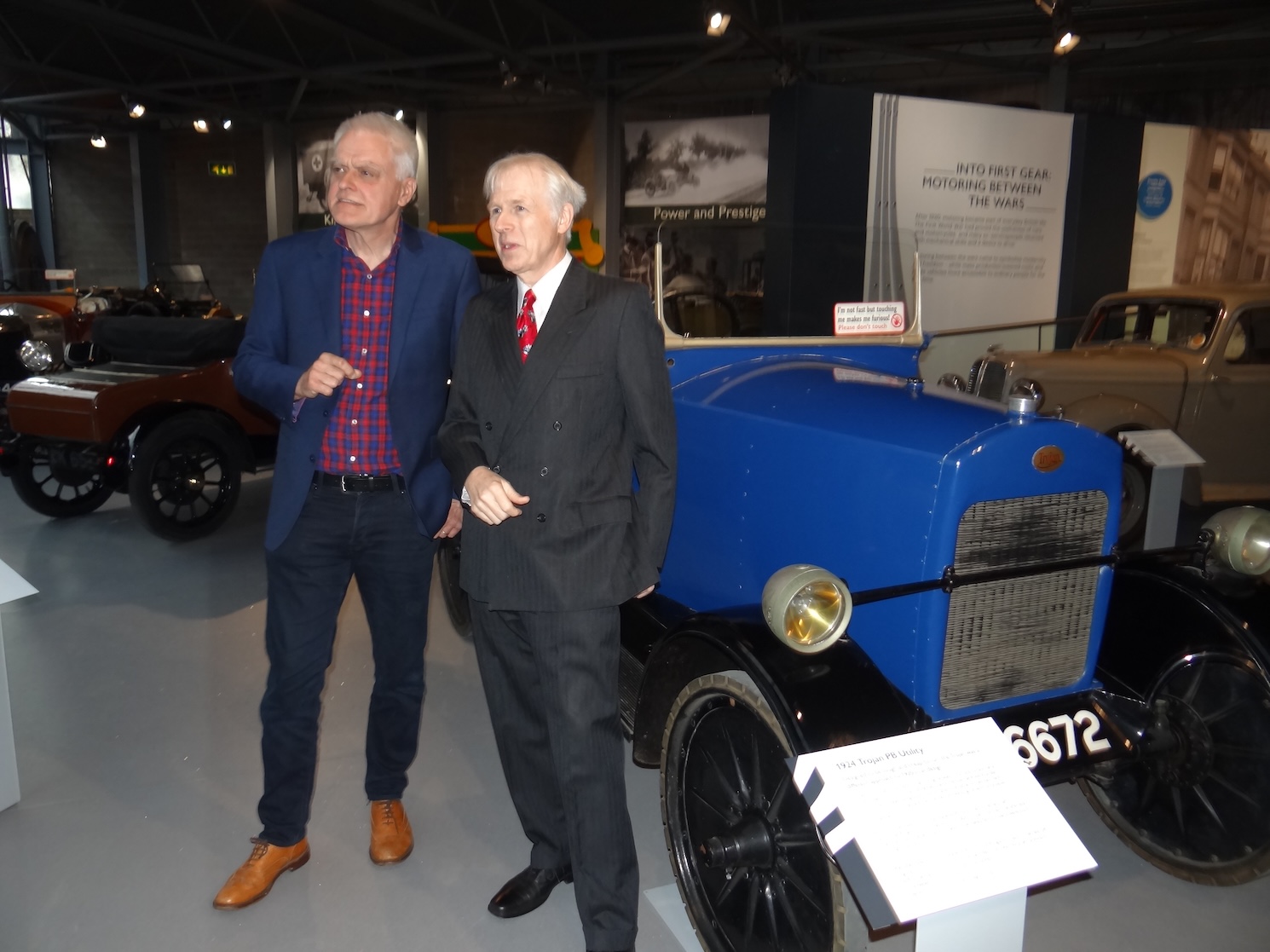
Chris Adamson was there at the opening and describes this exciting new approach at the National Motor Museum.
All Words and Photographs © Chris Adamson.
A radical reinterpretation of Britain’s motoring heritage has been unveiled, just in time for Easter visitor rush, at the National Motor Museum at Beaulieu in the heart of the New Forest.
The £600,000 re-vamp of the first floor is the most significant up-grade to the popular tourist attraction since the purpose-built museum was opened in July 1972.
It is the first phase of a long-term £23 million project, with the second phase running from 2026 until 2030 aimed at transforming the remaining spaces of the museum, including the presently underutilised lower ground floor, and opening-up public access to the stored objects within the Collections Centre.
The new exhibition space is called: ‘Driven: Britain’s Motoring Story’ and consists of five colour coded zones focusing on how motoring has changed the face of Britain over the decades, delving into the social, economic and cultural impact of the automobile.
Gone are the previous regimented rows of vehicles parked on plinths or behind barriers and in its place are a series of accessible time periods where each vehicle is given its own space and own identity with room to view the cars and motorcycles from 360 degrees.
The overall number of vehicles in the area has been reduced to allow the exhibition area to flow more freely and 20 per cent of the cars are either being shown for the first time in the museum or are being seen for the first time in a generation – they have come from the museum’s extensive reserve collection and are mainly the more mundane everyday cars such as the Morris Minor and Ford Anglia, rather than exotic or rare vehicles.
They are arranged in period settings with a backdrop of large blow-up photographs and illustrations (mainly from the museum’s extensive photographic library) and these are accompanied by written explanations, audio visual display screens showing film footage from the relevant era and display cases housing period artifacts and memorabilia from the museum’s archives, none of which have been on display before.
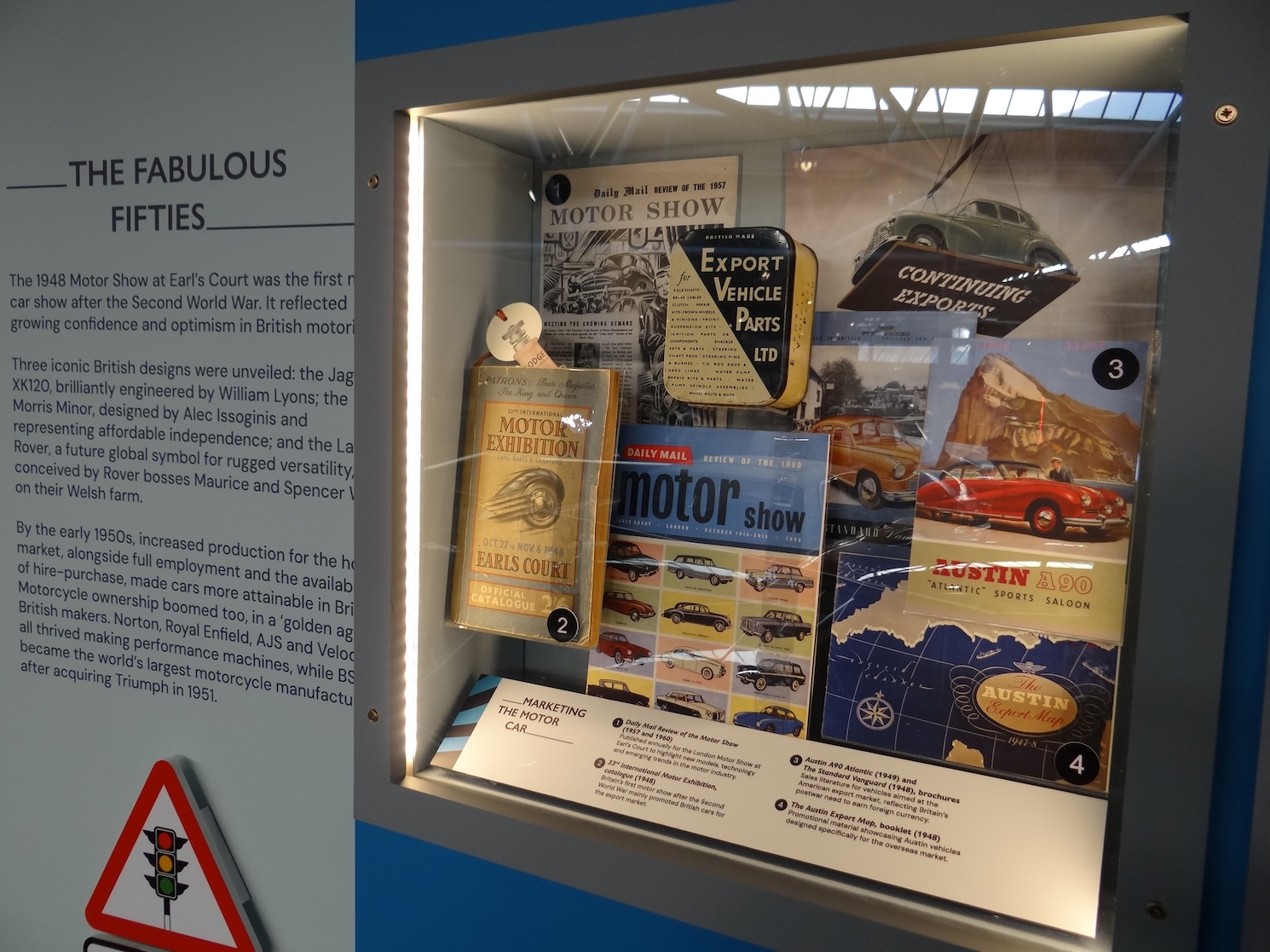
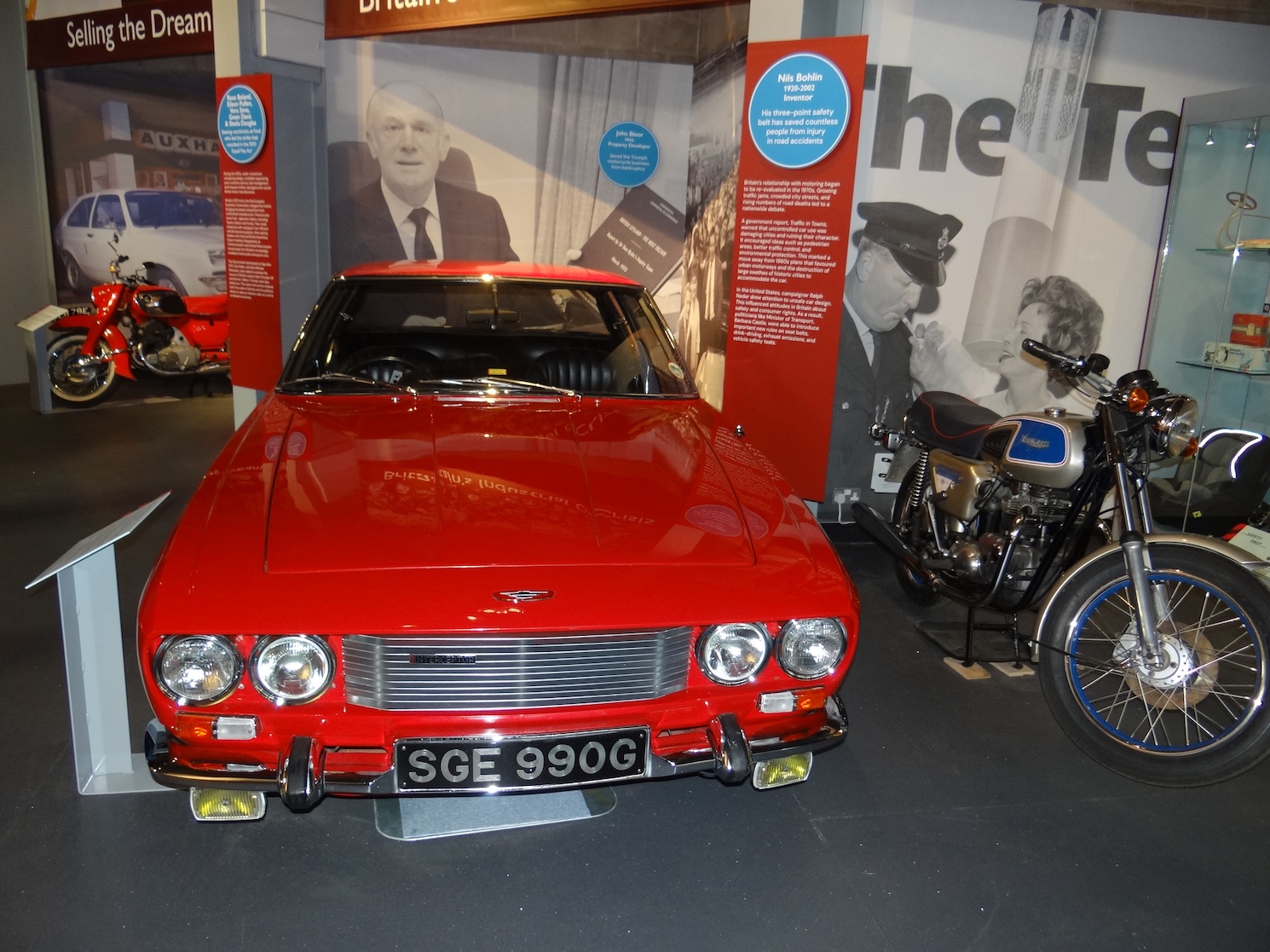
Dotted throughout the display space are ‘blue plaques’ that recognise unsung heroes of motoring such as Nils Bohlin (1920-2002) the inventor of the three-point safety belt, pioneering female motoring journalist and Top Gear presenter Sue Baker, and Rose Boland, Eileen Pullen, Vera Sime, Gwen Davis and Sheila Douglas – sewing machinists at Ford who led a strike that resulted in the 1970 Equal Pay Act.
Bringing the museum up-to-date there are plenty of interactive features such as dress-up and unbox your ‘Motor Poseur’ look, speak to the driver through a tube, lift the receiver and listen in on stories straight from the car salesroom, sniff the smells of a Victorian street, step into a 70s retro living room and watch television car adverts from the period, and listen to a car audio jukebox.
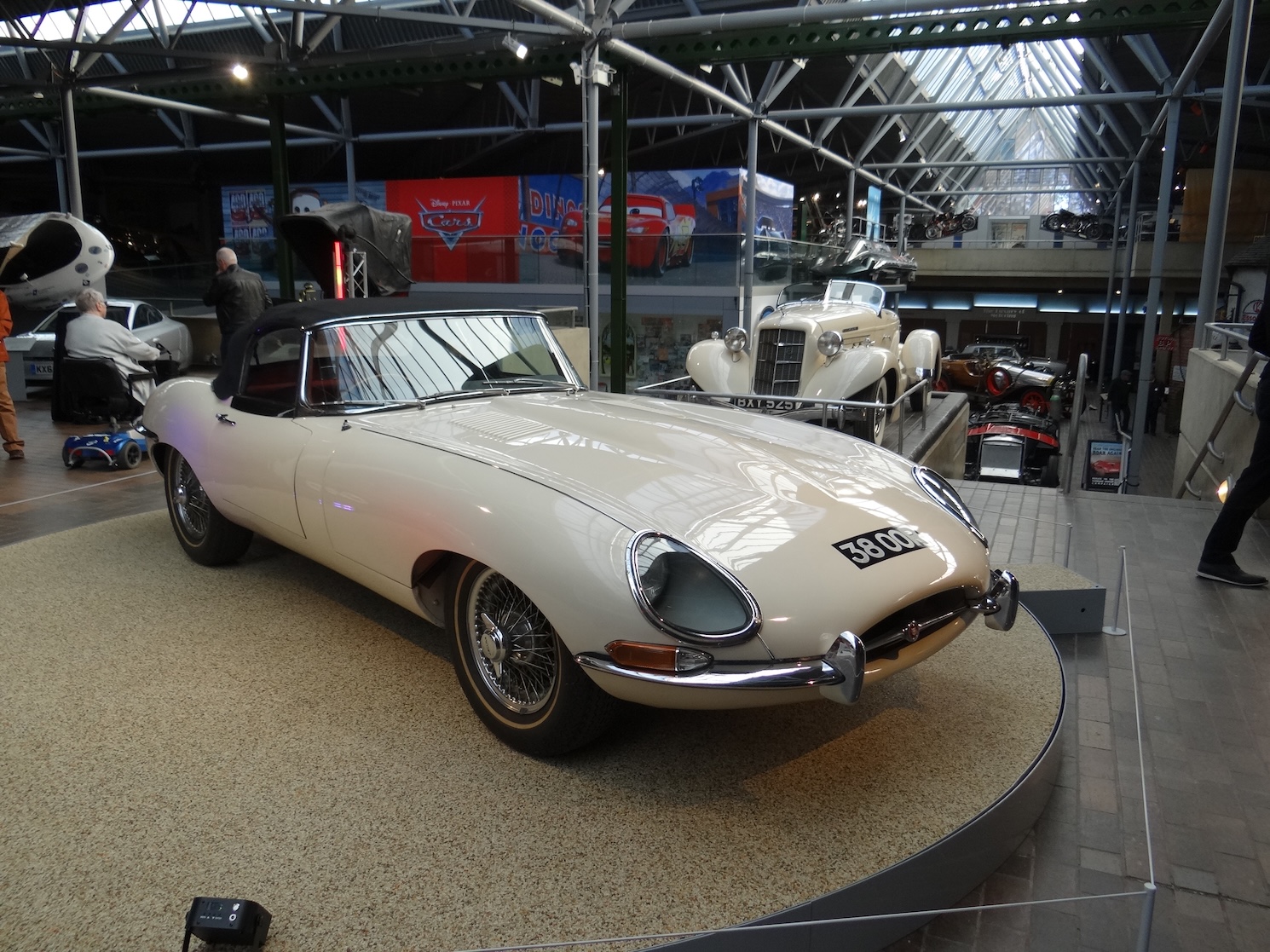
Central to the exhibition space is a new circular information desk and a revolving spotlight stage which will feature a changing line-up of loan vehicles – the first being an early E-Type Jaguar which was the 22nd right hand drive E-Type built and features the 43rd body and the 52nd engine made.
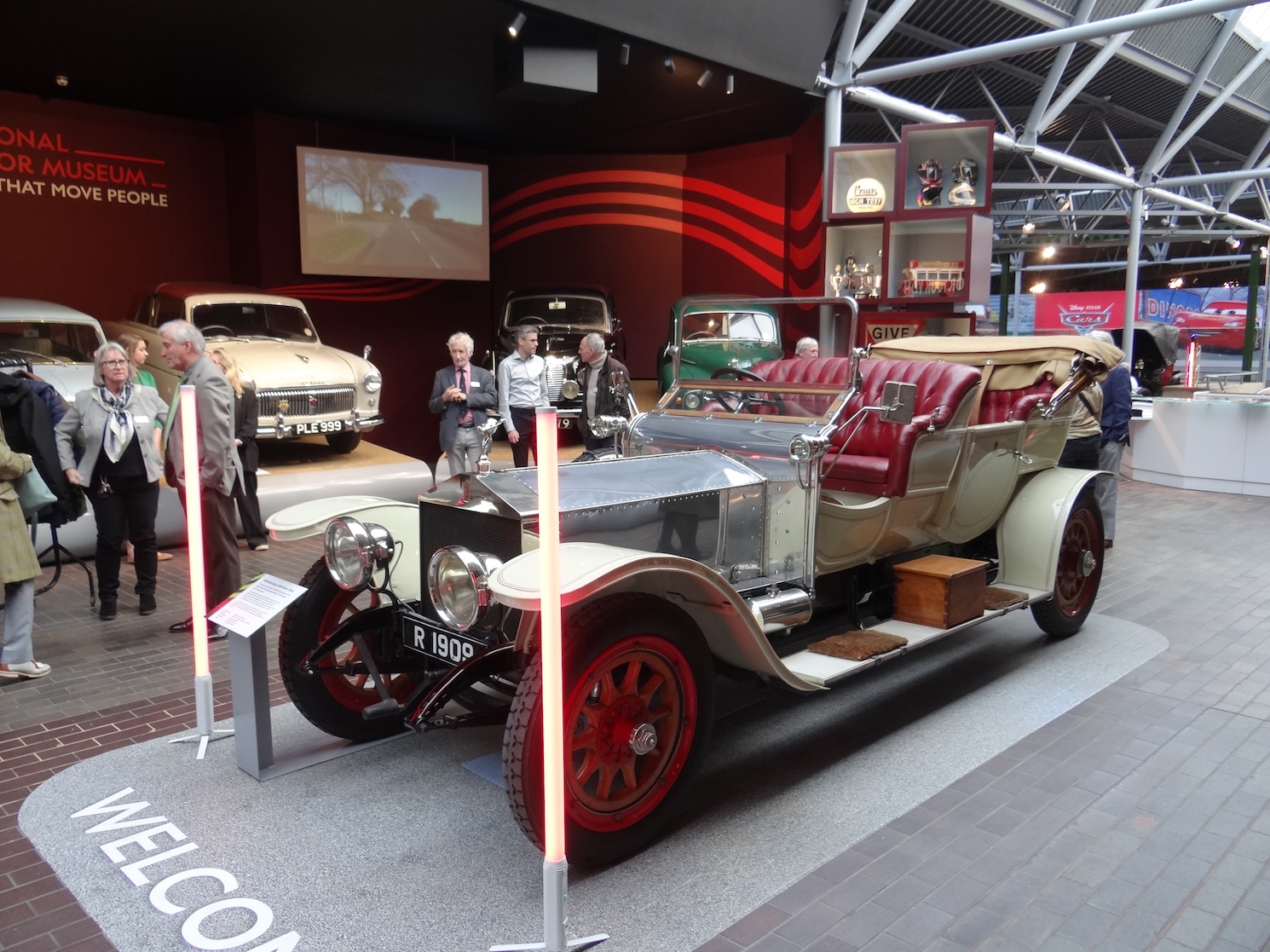
When it comes to the display zones themselves, the first section covers the period 1870 to the 1910s and is titled: Ignition: Motoring’s First Pioneers. It includes the oldest self-propelled British passenger-carrying road vehicle still in working order, the 1875 Grenville Steam Carriage and the second oldest surviving Bugatti. It is believed that this car was originally owned by the Bugatti family and reputed to have been used on the Western Front during World War One.
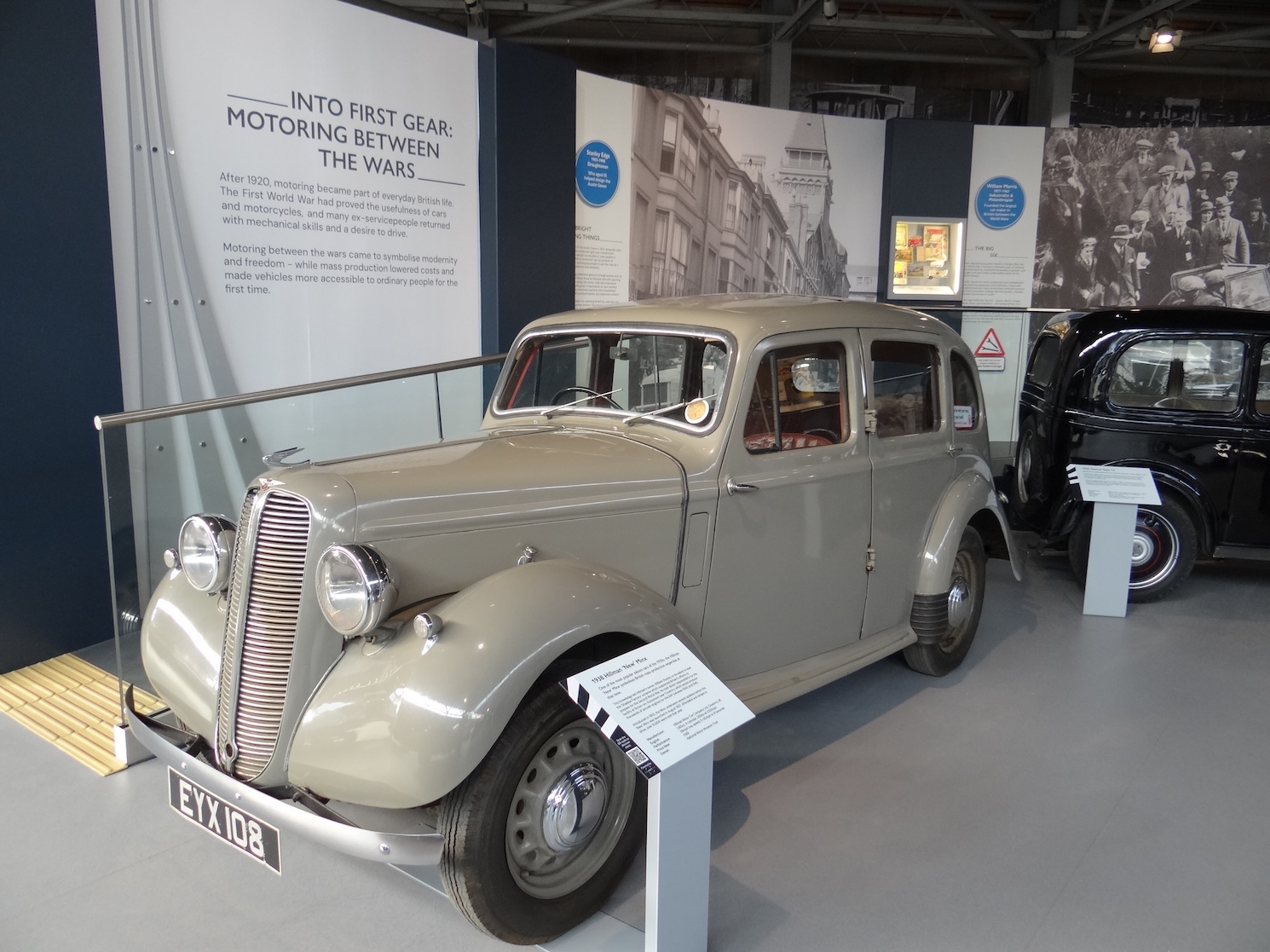
Moving on, the 1920s and 1930s are covered by Handbrake Off: Motoring Between the Wars. This section shows how mass production lowered costs and made vehicles more accessible to ordinary people for the first time. Included in the exhibition is a 1923 Calcott 11.9hp, a family car from a small British company based in Coventry.
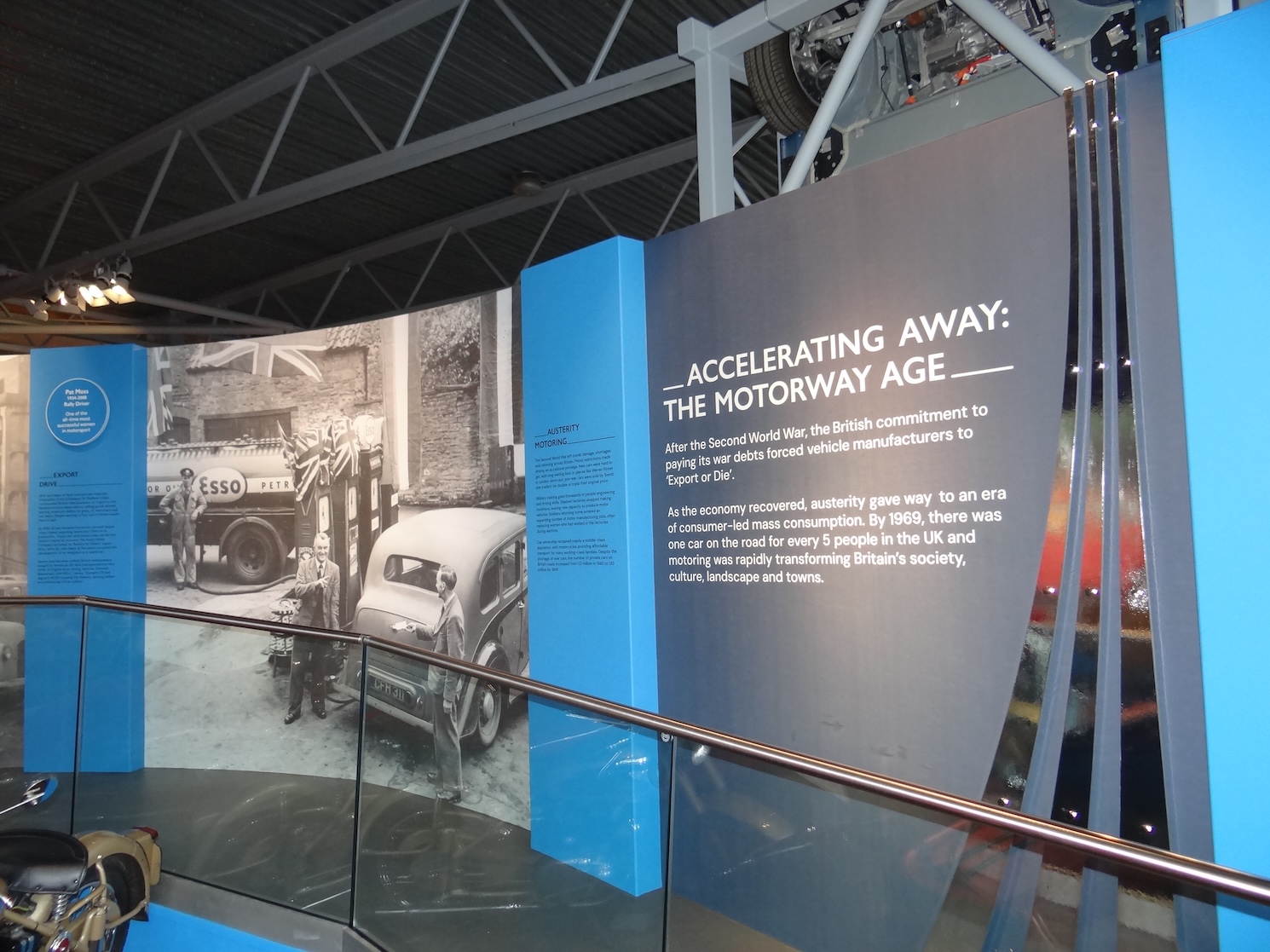
Accelerating Away: The Motorway Age spans the 1940s and 1960s and shows how the economy recovered after the Second World War and austerity gave way to an era of consumer-led mass consumption. The first of the famous TR series of Triumph sports cars, the 1954 Triumph TR2 represents this era alongside a 1959 Austin Mini Seven, one of the oldest in existence.
The 1970s are titled Buckle Up: Motoring through Challenging Times. This is the period when car sales hit record levels, with stylish models inspired by trans-Atlantic fashions, while motoring took a starring role in popular culture. Ford emerged as the sales leader and its output is represented by a 1971 Ford Capri 1600L, the epitome of ‘70s accessible performance, style and glamour. In the world of motorcycles, Honda’s C77 rivalled British motorcycles, as the Japanese motor industry rose to dominance and it’s this bike that’s included in the display.
One of the first production examples of the Hillman Imp is also on show here as is a Jensen Interceptor, the British-made, luxury touring car with a huge thirst for petrol, which reflects Britain’s declining motor industry in the face of the petrol crisis and fuel shortages.
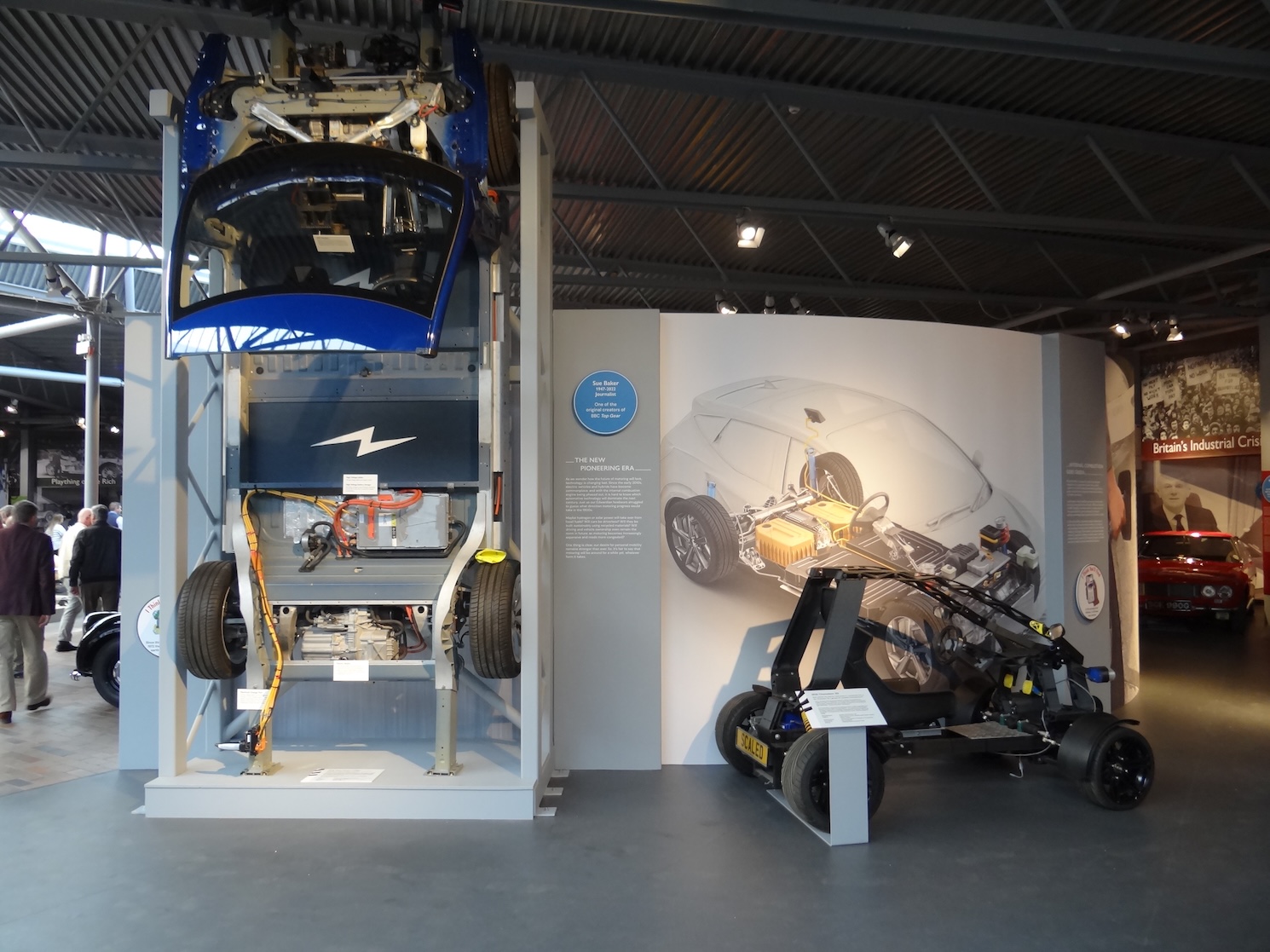
Finally, the 1980s to today are represented by Plugged In: New Journeys. This is the time of growing traffic jams, crowded city streets, and the rising numbers of road deaths which led to new rules on seat belts, drink-driving, exhaust emissions, and vehicle safety tests.
An unregistered 1986 Citroën 2CV is part of the display, as is one of the most desirable Fords of all time. the Sierra RS Cosworth. More recent developments in the motoring story are reflected with Europe’s first 3D printed electric vehicle the 2020 Chameleon 3D, a Model S chassis from a 2016 Tesla Model S P90D and the 2015 Volkswagen XL1, a pioneering concept for a super-efficient diesel hybrid.
The new exhibition project has been funded with support from The National Lottery Heritage Fund, Garfield Weston Foundation, the Wolfson Foundation, and the Hampshire and Isle of Wight Community Foundation.
Dr Jon Murden, Chief Executive of the National Motor Museum commented; “This exhibition will herald an exciting new look to the Museum from the Spring of 2026. Creating new displays with the overarching story of motoring from its earliest times to the present day.
Britain without cars and motorcycles would be unrecognisable – they have changed the shape of our cities, nations and landscapes, revolutionised the way we make and sell things, and transformed how we live our lives. From assembly-line mass-production to electric cars, the new gallery shares the stories that have moved us.”
The new exhibition was officially opened on 26 March by Lord Montagu of Beaulieu and Gadget Show television presenter Jon Bentley, who was previously a producer on BBC Two‘s Top Gear, and the series producer of Fifth Gear – he also has a corner named after him on the Top Gear test track.